


Related solution
Applications & Grants
Connect application evidence, human review and the next program stage.
Explore the solution →


Live webinar: Wednesday, October 7, 2026 | 9:00 AM PT
Building context across your data. In 30 minutes, see how to connect data and definitions across teams, with the right permissions and governance, so scattered data points become intelligence your teams and AI can actually use.
Save your spot (free)USE CASE / SOFTWARE GUIDE
Grant management software for foundations helps grantmakers receive applications, coordinate review, maintain award records, track obligations and understand funded work. Good software preserves the relationship between the funding decision, the grantee’s plan and the evidence that arrives afterward, so staff and trustees can use what they learn.
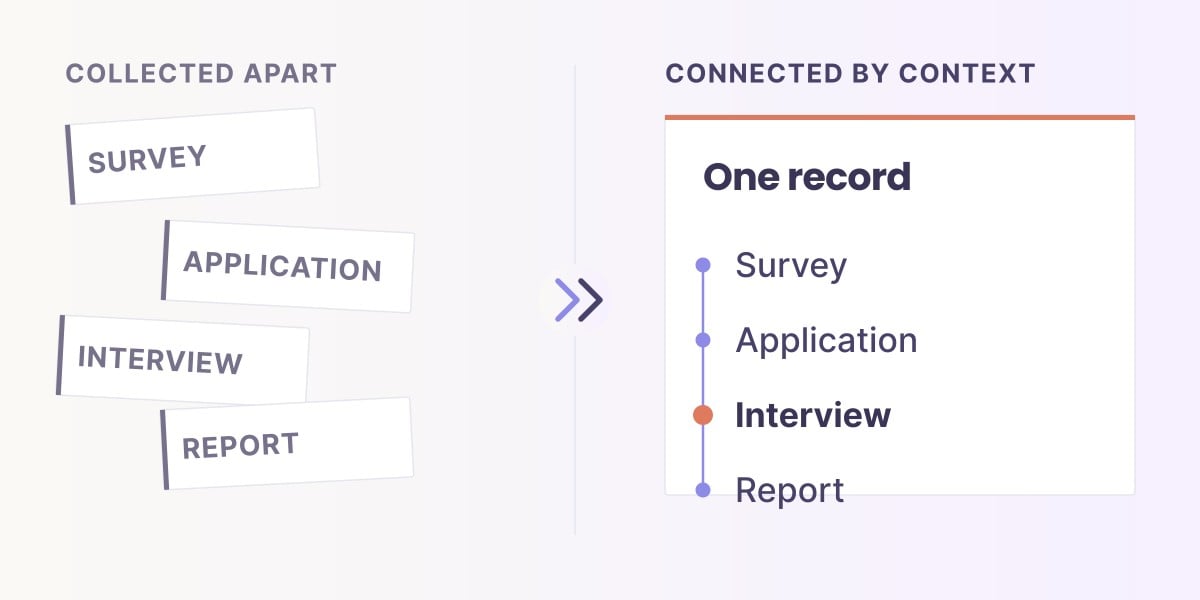
The difficult work often sits between formal milestones. An application explains an organization’s starting point, a progress report describes a changed plan and a conversation reveals why delivery is delayed. When those accounts live in different folders, staff repeatedly reconstruct the grant before a review and aggregate results that may use incompatible definitions.
AI can help read submissions and reports sooner. Sopact’s AI-native approach connects that analysis with continuing grant and program context, making it available through AI Assistance as new evidence arrives. Its value is informed grantmaking and useful portfolio knowledge throughout delivery, alongside the foundation’s financial and administrative responsibilities.
Understand the proposal, evidence and questions for the committee.
Read progress against the agreed purpose and changing conditions.
Use comparable results with the explanation behind each finding.
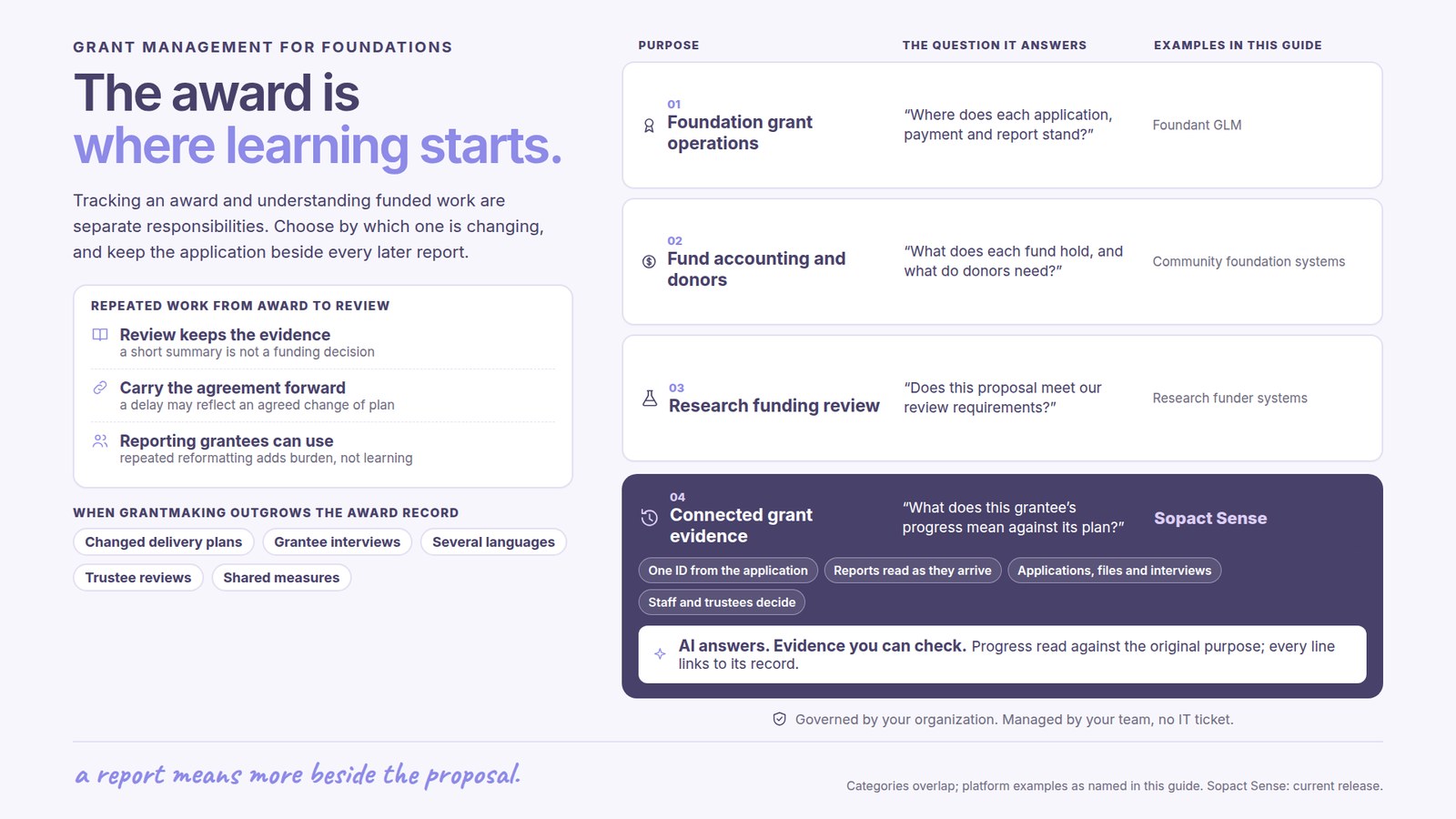
Private and family foundations may need a focused grantmaking workflow. Community foundations may also need fund accounting and donor services. Research funders can have different review and reporting requirements. The label “foundation software” does not make those purchases interchangeable.
Grant administration and portfolio understanding overlap, but each deserves attention. A system can track an award correctly while staff still struggle to interpret grantee narratives. Equally, useful AI analysis does not replace the financial record or the approval process the foundation requires.
The buying decision should establish which responsibility is changing: application review, grant administration, grantee reporting or learning across funded programs.
Committees need the proposal’s purpose, relevant support and unanswered questions. Analysis is valuable when it helps reviewers focus their reading and decide what needs clarification. A short summary is not a funding decision.
A report is easier to interpret when staff can see the original objectives and any agreed changes. A delayed activity may reflect a revised delivery plan rather than failure against the original schedule. The relationship history makes the finding meaningful.
Repeated requests for differently formatted versions of the same information add burden. Reusing appropriate evidence and agreeing a proportionate reporting purpose can make the foundation’s questions easier to answer. The goal is useful learning, not simply more submitted fields.
Foundant GLM documents applications, review, payments, follow-up and outcome reporting, including AI application summaries. It is a relevant foundation-specific operational choice. A buyer should not assume that established grant software stops at selection.
Sopact focuses on connected collection and decision intelligence across applications, files, interviews, grantee updates and program feedback. Its value is making the evidence usable for continuing questions, including work that extends beyond the grant transaction.
A foundation may need one broad system or an agreed combination. If the administrative platform is working, the opportunity may be to improve evidence collection and analysis around it. See the grant-management buying guide for purpose-based platform choices.
An application can establish the intended participants, delivery model and support needs. Later reports, interviews and feedback add what happened. Sopact connects those sources so staff can examine a current question with the earlier evidence still available.
For example, a funded training program might reach its enrollment target while learners report difficulty attending at the scheduled time. The useful finding combines the headline result with the experience behind it. It can inform a conversation about delivery while the grant is active, rather than appearing only in a year-end report.
Analysis becomes available as data arrives in the configured workflow and can be used through AI Assistance. Staff still interpret the evidence, discuss circumstances with the grantee and decide whether support or expectations should change. AI preparation and accountable grantmaking remain distinct.
A data dictionary gives a reported result its meaning: the population, period, definition, source and counting rule. Foundations need this context when different grantees use the same word differently. “Reached” might mean attending once, completing a service or seeing a public campaign.
A useful portfolio report can combine compatible activity measures while preserving program-specific outcomes. Completion of a training course and improved housing stability should not be collapsed into an invented common success score. Nor should approved funding and disbursed funding be treated as the same amount.
Keep the reporting question visible. Trustees may need to understand delivery and emerging needs across a portfolio; a program officer may need the reasons behind one grantee’s change in plan. The same evidence can support both accounts at the appropriate level of detail.
Promotora Social México’s published story describes work to connect application evidence, evaluation and multilingual reporting. The account includes integration testing, so it should be read as an implementation story rather than proof of a completed portfolio-wide outcome.
The relevant benefit is continuity between review and reporting: the evidence used to understand a proposal remains available as the foundation’s questions develop. This is especially useful when documents and discussions cross languages or organizational teams.
Sopact’s typical setup estimate is two days to two weeks for an agreed scope, with personalization and continuing team support. Agree the collection, review and reporting responsibilities at the start; a full financial-system migration is a separate scope.
It supports grant applications, review, awards, obligations, grantee follow-up and reporting. Good software also preserves the context needed to understand funded work.
No. Understanding program evidence and maintaining financial accounts serve different responsibilities. The chosen systems should have clear ownership of each.
It explains the original purpose, starting conditions and intended work, helping staff interpret progress and agreed changes.
Yes. Common definitions support compatible portfolio measures, while program-specific outcomes preserve the meaning of different kinds of work.
No. Incoming analysis can prepare evidence and questions. Reviewers and the foundation retain judgment and responsibility for decisions.
Continue with a purpose
Related solution
Connect application evidence, human review and the next program stage.
Explore the solution →Continue learning
Explore how program criteria guide evidence review.
Start learning →
Customer story
An implementation connecting grant evidence with multilingual review and reporting.
Read the story →See how Sopact can connect applications, grantee evidence and reporting around your foundation’s funding and support decisions.
See it with your workflow →