Understand the reporting requirements in the award
The award agreement and funder’s instructions determine what you must submit. Record the deadline, reporting period, required format, performance measures, financial basis and approval process before collecting the first update. An interim progress report and a final report may have different requirements.
For U.S. federal awards, Grants.gov describes reporting responsibilities that can include financial, project and compliance information. The specific award and agency instructions govern; a generic impact-report template is not a substitute for them.
Financial reporting
Explain expenditure within the award’s scope, budget differences and any required supporting information. Keep the amount awarded, cash received, commitments and actual expenditure distinct. Reconcile reported amounts with the organization’s financial records.
Progress and performance reporting
Describe delivery against the agreed plan, the relevant results, delays and actions. State when an outcome is not yet due for measurement. A program completing training this quarter may not have six-month employment outcomes to report yet.
Final reporting
Bring together the award-period results, financial position, unresolved issues and any required closeout information. Follow the funder’s instructions on balances, records and approvals rather than assuming the narrative report completes every obligation.
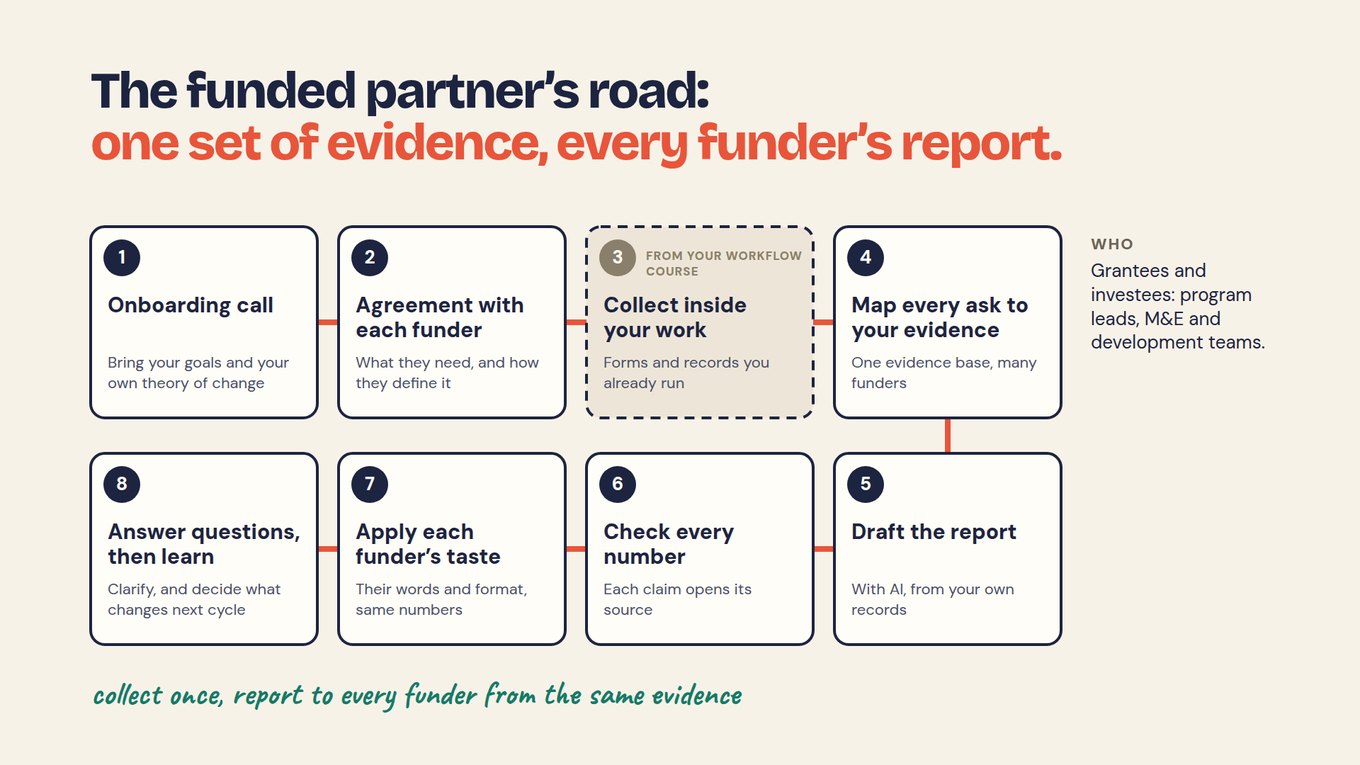
A practical grant report structure
- Award and reporting scope: recipient, award, period and the activities covered.
- Progress against the plan: agreed milestones, delivery and explanations of differences.
- Results and evidence: relevant measures, populations, methods and limitations.
- Financial position: spending against the approved budget, with required explanations.
- Risks and changes: challenges, responses and changes requiring funder approval.
- Next period: planned work, responsibilities and the information still to collect.
Use the funder’s headings when they are prescribed. This structure helps organize the evidence behind those headings; it does not replace a mandatory form.
Grant progress report example
Fictional example. A $100,000 award funds a year-long training program with a target of 80 completions. At the midyear reporting date, the approved plan called for 40 completions.
Progress
Thirty-two participants completed training by the reporting date, against the interim target of 40. Eight additional participants are still enrolled; they are not counted as completions.
Explanation and response
Two classes were postponed after a venue became unavailable. The delivery team has arranged replacement sessions. Any proposed change to the award timetable will be discussed with the funder before being treated as approved.
Financial position
Expenditure is $42,000 against the $50,000 planned for this point in the award. The difference includes delayed venue and trainer costs. Lower spending alone does not establish efficiency, because delivery is also behind schedule.
Results still to come
Employment will be assessed three months after each participant completes training. The report therefore presents current completions and follow-up dates, without filling the employment field with a different measure.
The report lets the funder distinguish delay from failure, lower expenditure from savings, and results that are not yet due from missing data. Attach the records and explanations the award requires.
Report to several funders without losing consistency
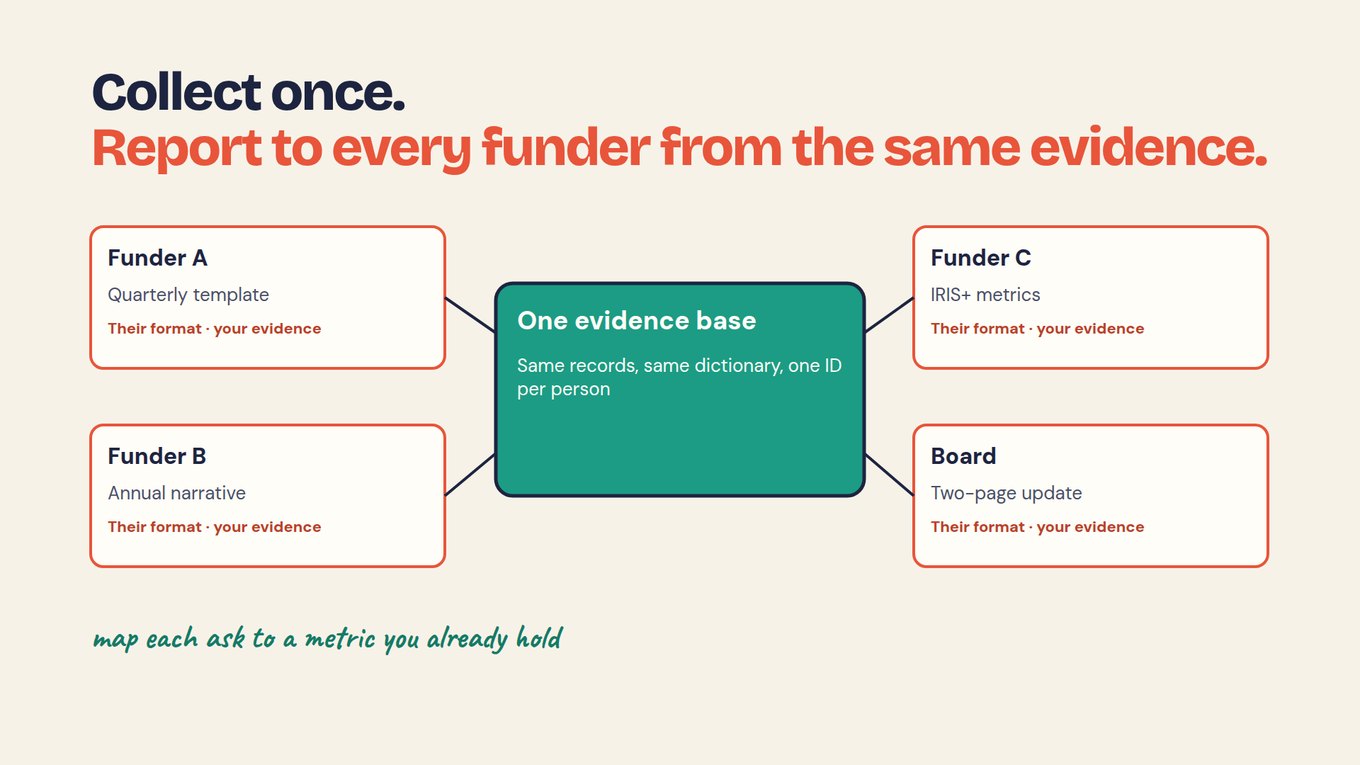
Keep a shared program evidence base, then map each funder’s requirements to it. Reuse a figure only when its definition, population and period match the request. One funder may ask for unique participants during the year while another asks for training attendances during its grant period; these are different measures.
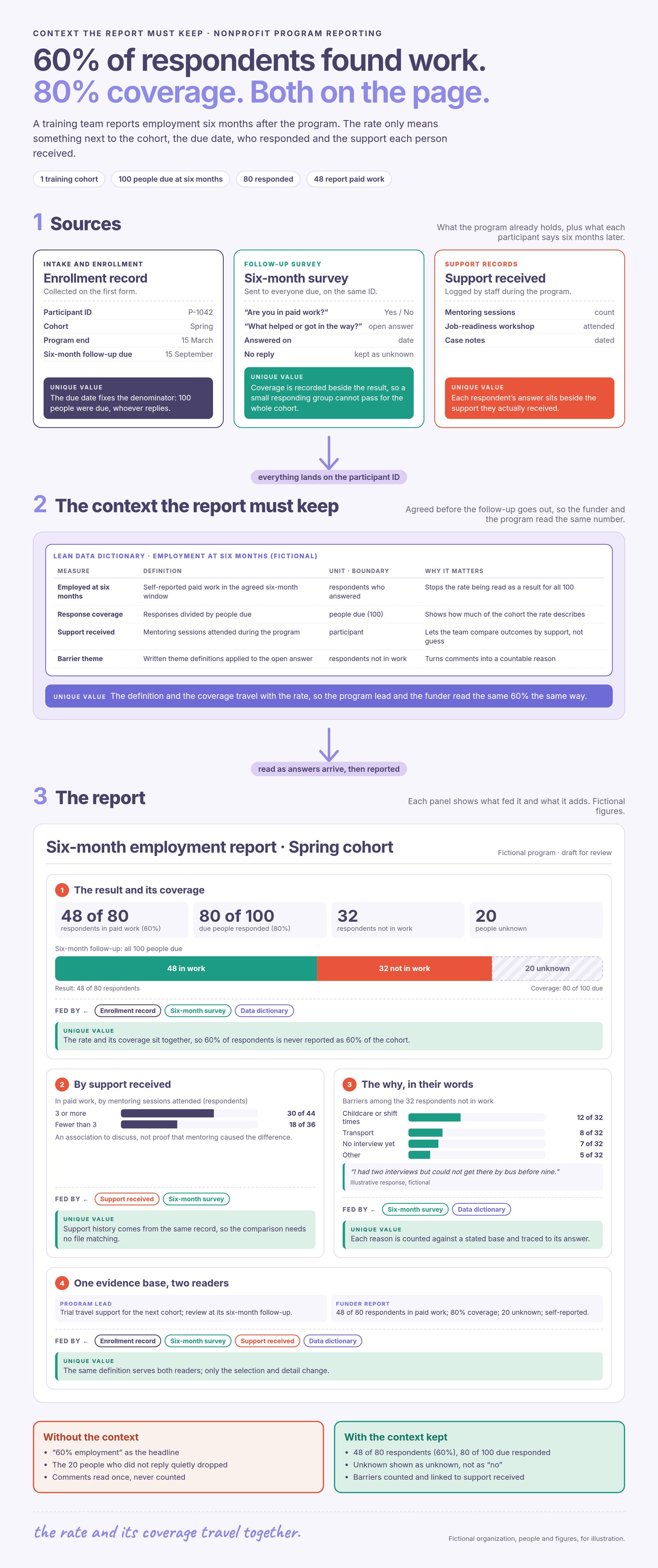
A small reporting dictionary makes those differences explicit. For “completion,” specify the attendance or assessment requirement, the relevant cohort, the completion date and the source. For “employment,” distinguish status at follow-up from a new job obtained after training. Record a definition change rather than silently applying it to earlier reports.
Here is a follow-up report built on that kind of dictionary: it defines employment at six months among respondents and keeps the people with unknown status visible beside the rate.
If funders ask for different outcomes, the shared evidence base may need additional collection. Consistency does not mean forcing every award into the same template or claiming that one dataset already answers every question.
What automated grant reporting should handle
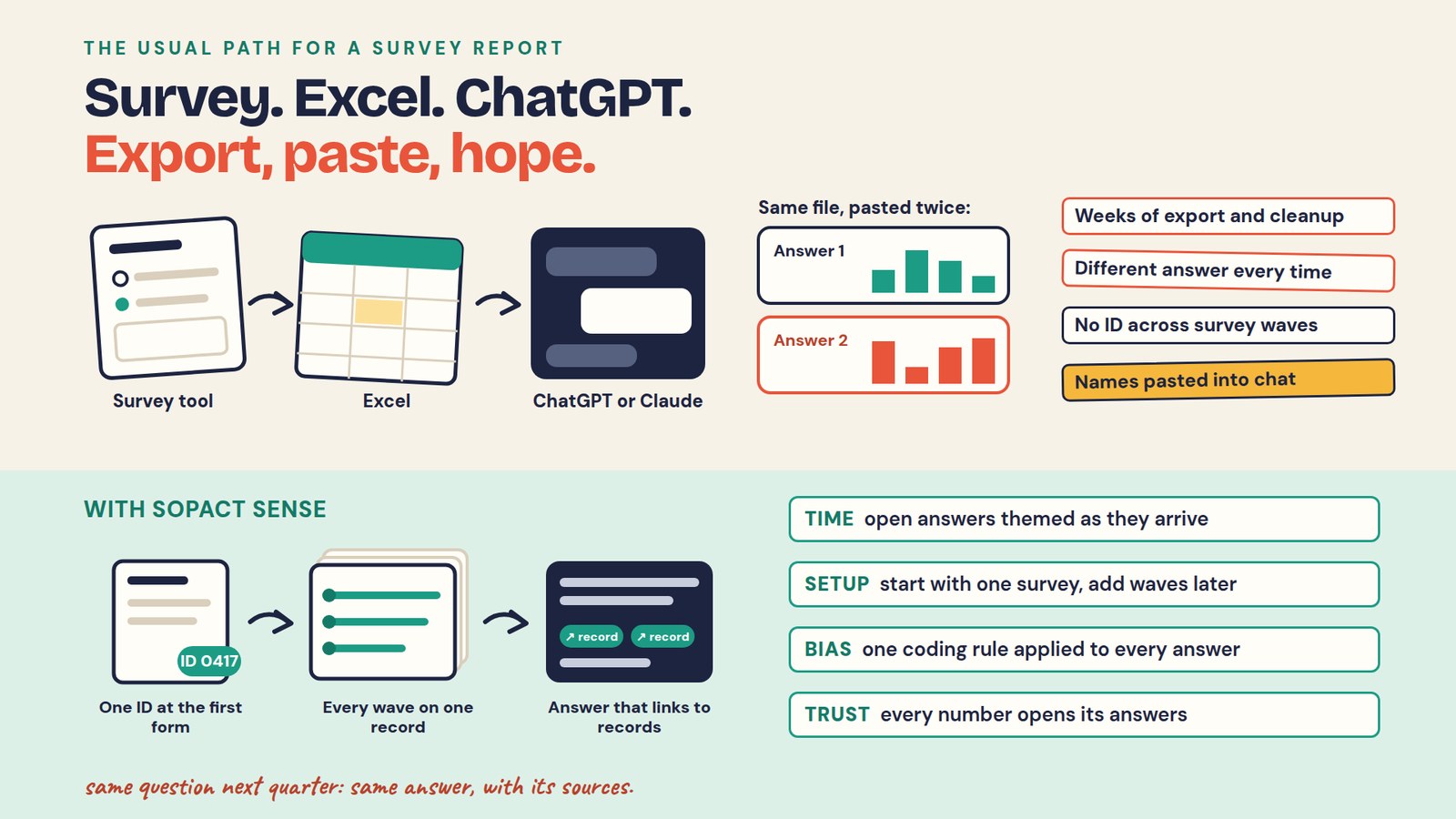
Useful automation reduces repeated collection, consolidation and report preparation. It can help organize submissions, analyze incoming feedback, prepare calculations and assemble drafts from approved evidence. It should also make missing information and conflicting definitions visible before review.
Separate three responsibilities when evaluating software. Grant administration handles awards, requirements and deadlines. Accounting provides the financial record. Evidence and reporting connect program results, qualitative feedback and the explanation of change. Confirm which responsibilities a platform covers and how it exchanges information with the systems you retain.
Sopact focuses on the continuing evidence behind program and portfolio decisions. It connects forms, files and feedback with shared context, with analysis available as data arrives. That lets teams ask questions while work is underway and reuse the findings in grant reports. It does not remove the need for financial reconciliation, award-specific review or human approval.
A useful demonstration starts with a real reporting requirement: identify a result, inspect its evidence, explain a delay and show what changes when new information arrives. The relevant benefit is less repeated preparation with a clearer account of progress.
Prepare the next report from the award requirements
Confirm the upcoming deadline and the evidence each requirement needs. Resolve mismatches before drafting, then review the narrative and financial figures together. For a broader results narrative, use the impact report template; for software selection, see impact reporting software.
Frequently asked questions
What is the difference between a grant report and an impact report?
A grant report addresses an award’s requirements, including progress and financial information. An impact report explains results and their meaning for an audience. An award may require both types of information.
Who prepares a grant report?
Program staff usually supply delivery and outcome information, finance verifies financial figures, and the responsible grant owner coordinates review. The organization should assign responsibility according to its award and governance arrangements.
Can grant reporting be automated?
Parts of collection, consolidation, analysis and drafting can be automated. Award interpretation, financial reconciliation, decisions and approval still require responsible human review.
What if a target was missed?
Report the actual result, explain the evidence for the difference and describe the response. Follow the award process for changes requiring funder approval rather than presenting a revised target as already agreed.