


Related solution
Network & Membership Intelligence
Connect stakeholder voice with the programs and relationships it informs.
Explore the solution →


Live webinar: Wednesday, October 7, 2026 | 9:00 AM PT
Building context across your data. In 30 minutes, see how to connect data and definitions across teams, with the right permissions and governance, so scattered data points become intelligence your teams and AI can actually use.
Save your spot (free)USE CASE / SOFTWARE GUIDE
Stakeholder engagement software helps organizations organize relationships, consultations, feedback and follow-up with the people affected by their work. Good software helps a team understand whose views it has heard, what those views mean for a decision and how the organization responded. Contact management, public consultation and recurring program feedback place different demands on the platform.
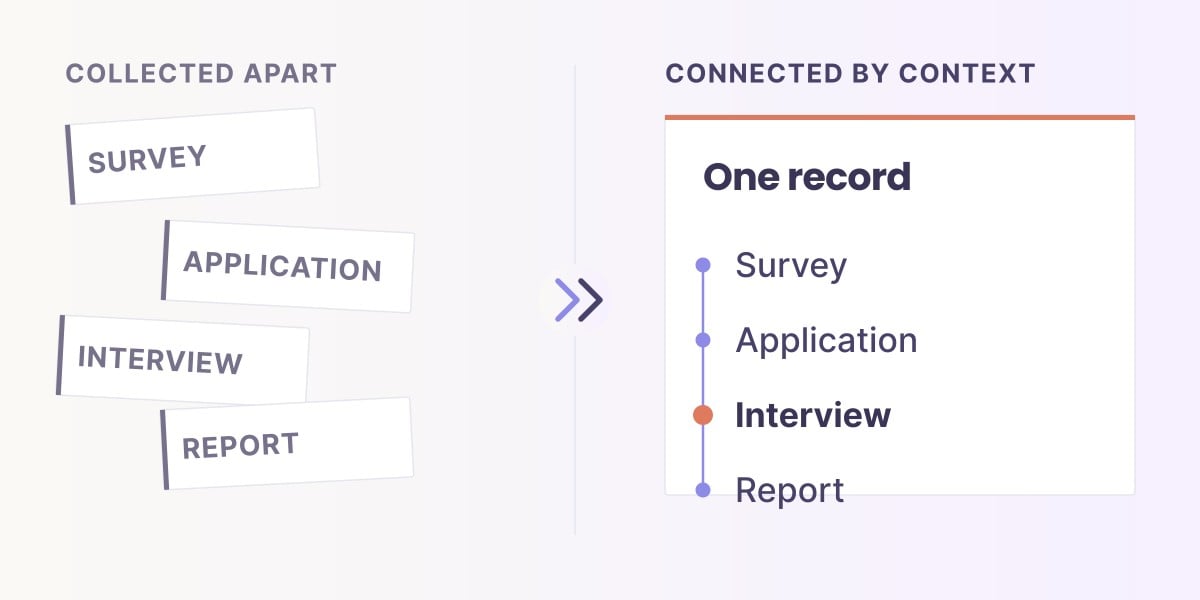
A meeting log can show that engagement happened without showing what the team learned. Survey results, interview notes and partner updates often remain separate, making it difficult to understand a concern across groups or explain whether the response addressed it.
AI can make qualitative feedback easier to analyze as it arrives. The greater value comes from interpreting it alongside the stakeholder group, program and earlier evidence. Sopact focuses on that connected understanding, helping teams use stakeholder voice in current decisions and carry the learning into later engagement.
Understand participation and the groups still missing.
Connect comments with the experience and program they describe.
Use the evidence now and learn from later feedback.
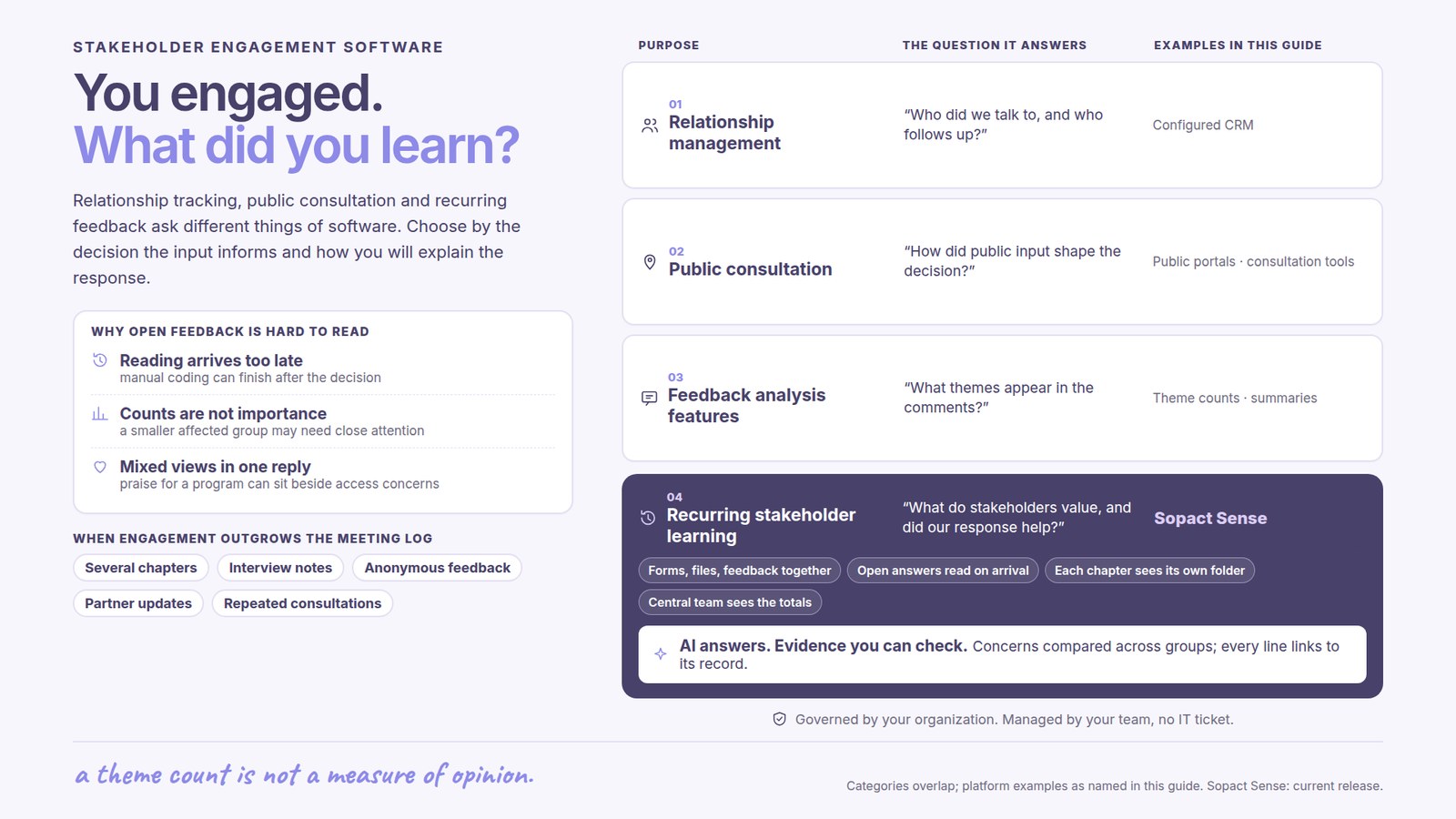
A partnerships or public-affairs team may need a clear history of organizations, contacts, conversations and commitments. The central value is coordination: colleagues know what has been discussed and who is responsible for following up. A configured CRM can be appropriate when this is the main requirement.
A public-participation process may need accessible submissions, consultation activities, geographic context and a record of how input influenced a decision. Public portals and formal consultation administration deserve specific attention. A feedback-analysis feature does not automatically cover those responsibilities.
Associations, foundations and program teams often need to combine surveys, interviews, local meetings and reports over time. The buying question is whether those sources help explain stakeholder priorities and improve the next program decision. This is where Sopact’s Network & Membership Intelligence approach is relevant.
Stakeholders need to understand what is open to influence. Asking for views on an already settled decision creates a different expectation from inviting people to shape the options. The software should support the engagement purpose rather than make every activity look like the same survey.
The IAP2 Spectrum of Public Participation (2024) distinguishes levels of participation according to the public’s role in a decision. Its practical lesson for software selection is to make the purpose and response visible: collecting comments, involving people through a process and sharing decision authority require different ways of working.
For a member association revising its events, for example, a useful process explains which choices members can influence, gathers views from different groups and reports what will change. The number of responses is only part of the account; the team also needs to explain how the input informed its decision.
Open-ended responses can explain a low rating, reveal an unanticipated priority or challenge the assumptions behind a consultation. Manual reading and categorization can delay that understanding until after a decision has been made. AI helps prepare themes and summaries while the material is still useful.
A theme count alone does not establish importance. A concern mentioned by a smaller affected group may require close attention even when it is uncommon overall. Similarly, positive sentiment about a program can coexist with criticism of its accessibility. Useful analysis retains both the pattern and the passages that explain it.
Sopact analyzes incoming evidence in the configured program context and makes it available through AI Assistance. Teams can ask how concerns differ across groups or relate to earlier feedback without starting another manual consolidation exercise. Staff interpret the evidence and decide the organizational response.
Chapters, partners and sites often ask different questions because their circumstances differ. A central team still needs shared meaning around the comparisons it makes. A concise data dictionary can define the stakeholder groups, reporting periods and common measures while allowing local questions to remain useful.
For example, an association might compare access to professional-development opportunities across chapters. Attendance adds participation context, ratings describe respondents’ experience and comments explain obstacles such as timing or relevance. Meeting notes may add local interpretation, but one representative’s account should not be counted as an answer from every member.
Sopact’s value is bringing these forms, files and feedback into a connected view. Local teams retain the detail of their work, while central staff can examine recurring priorities and the evidence behind them. Where feedback is anonymous, group-level analysis can remain useful without attaching a name to each contribution.
State which groups participated and where coverage is limited. A consultation reflects the people reached and willing to respond; it is not automatically a representative estimate of the whole community.
Explain the material concerns, areas of agreement and meaningful disagreement. Connect the findings to the decision being considered. A well-chosen quote can clarify a theme, but a memorable story should not stand in for the whole evidence base.
Describe the response, remaining questions and next review. Completing an action is different from resolving a concern. Later feedback helps the team understand whether the response was useful and whether circumstances have changed.
In Sopact’s ASME customer story, open-ended responses had largely been used as impact stories. Analyzing scholarship feedback revealed priorities such as avoiding debt and completing a degree—findings that had not been visible in the earlier use of the material.
Lily Le, Impact Director, described the earlier practice: “only used them as Impact Stories.” The case shows why stakeholder engagement should include analysis of what people actually say. Those priorities can make a program conversation more useful than a count of responses or a few selected testimonials.
Sopact’s typical setup estimate is two days to two weeks for an agreed workflow. Start with the engagement purpose, relevant sources and questions the team needs to answer. Public consultation portals, specialist communications or other operational systems should be included explicitly where the program needs them.
The ongoing value is the ability to use incoming evidence and preserve what the organization learns. Sopact combines self-governance, personalization and continuing team support so collection and analysis can evolve with stakeholder needs.
For the next planning step, the stakeholder engagement plan guide addresses the engagement itself. The stakeholder intelligence platform guide addresses a more detailed software shortlist.
It helps organizations coordinate stakeholder relationships, consultations, feedback and follow-up. Good software makes the input useful for decisions and helps explain the organization’s response.
A CRM emphasizes relationships and interaction history. Engagement work may also need consultation activities, analysis of stakeholder voice and feedback on organizational responses. Product boundaries overlap; choose around the actual work.
Yes. AI can help identify themes and prepare analysis, while people interpret meaning, consider participation gaps and decide the response. A theme count is not automatically a measure of public opinion.
No. Identified relationships can support continuing follow-up, while anonymous feedback can support group-level learning. Preserve the collection purpose and the anonymity participants were promised.
Continue with a purpose
Related solution
Connect stakeholder voice with the programs and relationships it informs.
Explore the solution →Continue learning
Explore how recurring feedback and program context become useful together.
Start learning →
Customer story
Analysis revealed stakeholder priorities in feedback previously used mainly as stories.
Read the story →Explore how Sopact can connect recurring feedback, local context and reporting for your organization.
See it with your workflow →