


What is community impact?
Community impact is the effect of a project, service, investment or policy on people in a particular community. Effects can be beneficial or harmful, intended or unexpected, and different for different groups. A credible assessment explains what changed, who experienced it and what evidence supports the explanation.
A new community facility, for example, may increase access to activities while creating noise or making some residents feel excluded. Counting visits describes use; it does not establish that everyone benefited. Residents’ accounts help explain the experience, alongside appropriate records and measures of change.
This is relevant to businesses, public institutions, community organizations and funders. Start with the decisions you can influence, rather than promising to measure every aspect of life in a neighborhood.
Examples of community impact
Scroll horizontally to see all columns →
| Project | Question about change | Evidence to consider |
|---|---|---|
| Community facility | Can residents who previously faced barriers use the service? | Use by time and location, access feedback and accounts from nonusers. |
| Workforce program | Do participants enter suitable work and remain in it? | Assessments, dated follow-up and employment conditions, with missing responses visible. |
| Housing initiative | Does housing stability improve, and for whom? | Appropriate tenancy measures, resident experience and wider local conditions. |
| Local business investment | Who benefits from new opportunities and who bears costs? | Employment or purchasing records, resident accounts and evidence of adverse effects. |
These questions require different methods. A satisfaction survey cannot establish a change in employment or housing stability. A transaction record cannot fully describe whether someone felt welcome or could access a service. Choose sources for the question each can answer.
What belongs in a community impact assessment?
A community impact assessment examines the likely or observed effects of an initiative on a defined community. Explain whether you are assessing proposed changes, reviewing implementation or examining outcomes already observed. A forecast should not be presented as a measured result.
- Define the scope. Name the area, affected groups, initiative and period.
- Describe the expected pathway. Explain how the activity could lead to change, including important assumptions.
- Ask what matters locally. Include perspectives beyond the people already involved in the project.
- Select evidence. Specify what will be collected, by whom and when.
- Examine distribution and explanation. Look at differences between groups and plausible alternative explanations.
- Agree how findings will be used. Identify decisions, responsibilities and how residents will hear back.
The CDC’s guidance on collaborative evaluation places participation throughout planning and interpretation. Inviting people to a final presentation alone gives them little opportunity to shape the questions or challenge an interpretation.
Plan collection around four practical questions
Use the questions below as a planning aid. They are not a formal measurement standard or a requirement to produce four scores.
Scroll horizontally to see all columns →
| Question | Possible source | Important limitation |
|---|---|---|
| Who took part, and who could not? | Participation records and targeted outreach. | Attendance records describe participants, not everyone affected. |
| How did people experience the work? | Short surveys, interviews or facilitated discussions. | People who volunteer feedback may differ from those who remain silent. |
| What changed over the relevant period? | Appropriate repeated measures, administrative records and accounts of change. | Observed change alone does not establish what caused it. |
| What response followed the findings? | A decision record and follow-up with the affected group. | Taking action does not automatically establish that the problem was resolved. |
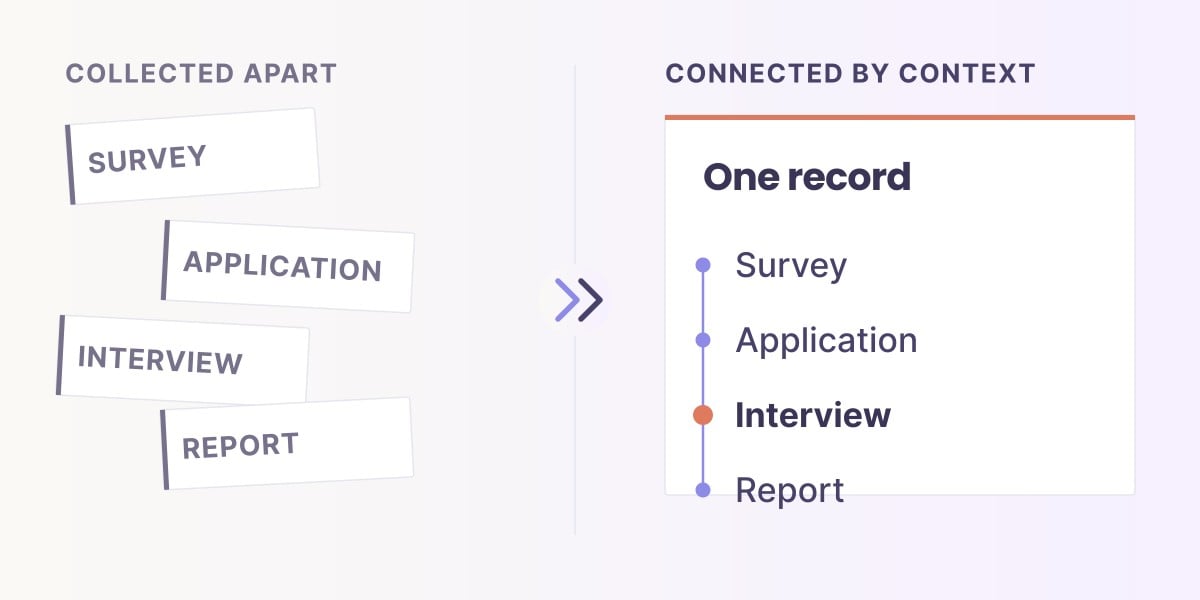
Keep routine information separate from repeated observations. If an organization already holds reliable registration information, avoid asking people to enter it at every event. Record changes when relevant, and explain which details are needed. Some questions require only anonymous or group-level evidence; individual tracking is not always necessary.
Questions you can adapt for residents
Introduce the purpose, who will review responses and what decisions are open to influence. Do not imply that every request can be adopted. Offer a way to participate that suits the people you need to hear from.
- What were you hoping to do when you used this service?
- What made it easier or harder to take part?
- What, if anything, has changed for you since the service began?
- What else may have contributed to that change?
- Have there been any unwanted effects for you or people around you?
- What should the team keep, change or investigate?
- How would you prefer to hear about the findings?
Pilot the wording with people similar to the intended respondents. Avoid questions such as “How has our successful project improved your life?” They assume a positive result and make disagreement harder. Provide space for no change, an adverse experience or a question the form did not anticipate.
Compare locations without imposing one long survey
Different neighborhoods or delivery partners may need different questions. Agree a small common set for the shared reporting decision, then allow additional local questions. Document the common definitions in a data dictionary: measure, unit, period, denominator, source, owner and version.
For example, distinguish unique residents from attendance entries. One person attending four sessions contributes one person to a reach measure and four entries to an attendance measure. Both can be useful, but adding them together produces a meaningless total.
Local wording is comparable only when it still measures the same concept. A question about access before using a service and a question about satisfaction after a visit should not be merged into one rating. Preserve the original questions and explain which comparisons are valid.
Worked example: more visits, but unresolved access barriers
Imagine a facility records 240 visits during a quarter from 90 distinct residents. Forty residents complete a feedback survey; 28 say the opening hours suit them. The observed share is 28/40, or 70% of respondents. It is not a finding that 70% of all residents can use the facility.
Comments from shift workers describe difficulty attending. A discussion with a local group identifies people who have not visited at all. The team now has three different sources: activity records, user feedback and accounts from nonusers. Keep their coverage and timing visible instead of treating every account as one representative survey.
A reasonable next step is to test an additional opening period and review uptake, resident experience and operating constraints. Record the reason for the decision and the date of the next review. More visits after the change could be encouraging, but weather, publicity or other events may also influence attendance.
Analyze comments without losing disagreement
Read the responses before finalizing themes. Define each theme with examples, retain contradictory accounts and distinguish the number of people from the number of mentions. A single resident may describe several barriers. Theme totals can therefore exceed the number of respondents.
Compare relevant groups only where the evidence and confidentiality arrangements support it. A small group can be identifiable even without names. Avoid sharing detailed combinations of location, age or personal experience that reveal who contributed.
AI assistance can propose themes or locate passages for review. It can also misunderstand language, overlook context or make an unsupported connection. Check the interpretation against the original account. A citation makes that check easier; it does not make the interpretation correct automatically.
Participatory evaluation offers ways for people affected by the work to take part in evaluation. Agree what influence participants will have and how differences in interpretation will be recorded.
Return findings in a form people can use
Share a concise account of what was heard, what the evidence can and cannot establish, what will change and what cannot change now. Use accessible channels rather than assuming everyone will download a long report. Let residents question the interpretation or correct an important omission.
A decision record can contain the issue, supporting evidence, response, owner, review date and current status. Distinguish “action agreed,” “action completed” and “effect checked.” If a proposal is not adopted, explain the reason rather than reporting only the suggestions that became actions.
Do not promise that reporting back will necessarily increase trust or future response rates. It makes the process more accountable; whether people find it useful needs to be learned from their response.
Write a community impact report that matches the evidence
Include the scope, intended change, people consulted, sources, methods, findings, limits and decisions. Separate activity counts from observed outcomes and causal claims. Keep negative or uneven effects visible. Obtain appropriate permission for quotes and images, and avoid presenting one story as representative of everyone.
For practical help, use How to Write an Impact Report and the report examples. To develop the wider evidence plan, continue through Impact Measurement & Reporting.
Sopact is relevant when repeated surveys, partner submissions and documents need to stay connected to their source, period and agreed definitions. Evaluate a small workflow first. A shared record can support review and reporting; it does not substitute for community participation or an appropriate evaluation design.
Watch: distinguish outputs from outcomes
This video helps separate what a project delivers from the change it is trying to support. Apply the distinction alongside the coverage and causal limits described above.
Frequently asked questions
Is community impact always positive?
No. Examine negative and unintended effects, as well as benefits. Different groups may experience the same initiative differently.
How is community impact different from collective impact?
Community impact describes effects on a community. Collective impact describes an approach to coordinated work among organizations. A collective initiative may seek community impact, but coordination alone does not establish results.
Do we need to track every resident individually?
No. Use individual records only where the question and permissions justify them. Anonymous feedback or group-level measures may be more appropriate.
How often should we collect feedback?
Match collection to when experience or outcomes could change and when a decision can be made. Repeated surveys without a clear use can add burden.
Does a positive before-and-after result prove impact?
It describes an observed change. Assess alternative explanations and use an evaluation design that supports the strength of claim you need.
