


Bring your evidence plan and checked findings. This exercise produces a short report brief. You can then write it yourself or use the next AI-assisted drafting exercise.
Ask a fair question.
“Should we change the support offered after training?” leaves room for an honest answer. “How do we prove our training succeeded?” can push the writer toward selecting only favorable evidence. Record the question before choosing headline figures.
Reader: course leadership.
Decision: whether to test additional practice support.
Scope: the agreed cohort’s 30-day follow-up.
Evidence: completion records, reviewed responses and comments.
Open issue: missing follow-up and uncertainty about sustained use.
Review: named owner checks claims and approves the next action.
Use a structure the reader can follow.
- State what the reader needs to understand or decide.
- Explain what was delivered against the plan.
- Present the observed outcomes with sources and limitations.
- Explain material shortfalls and what remains unknown.
- Include spending and variance explanations where required.
- Name the next action, owner and decision needing agreement.
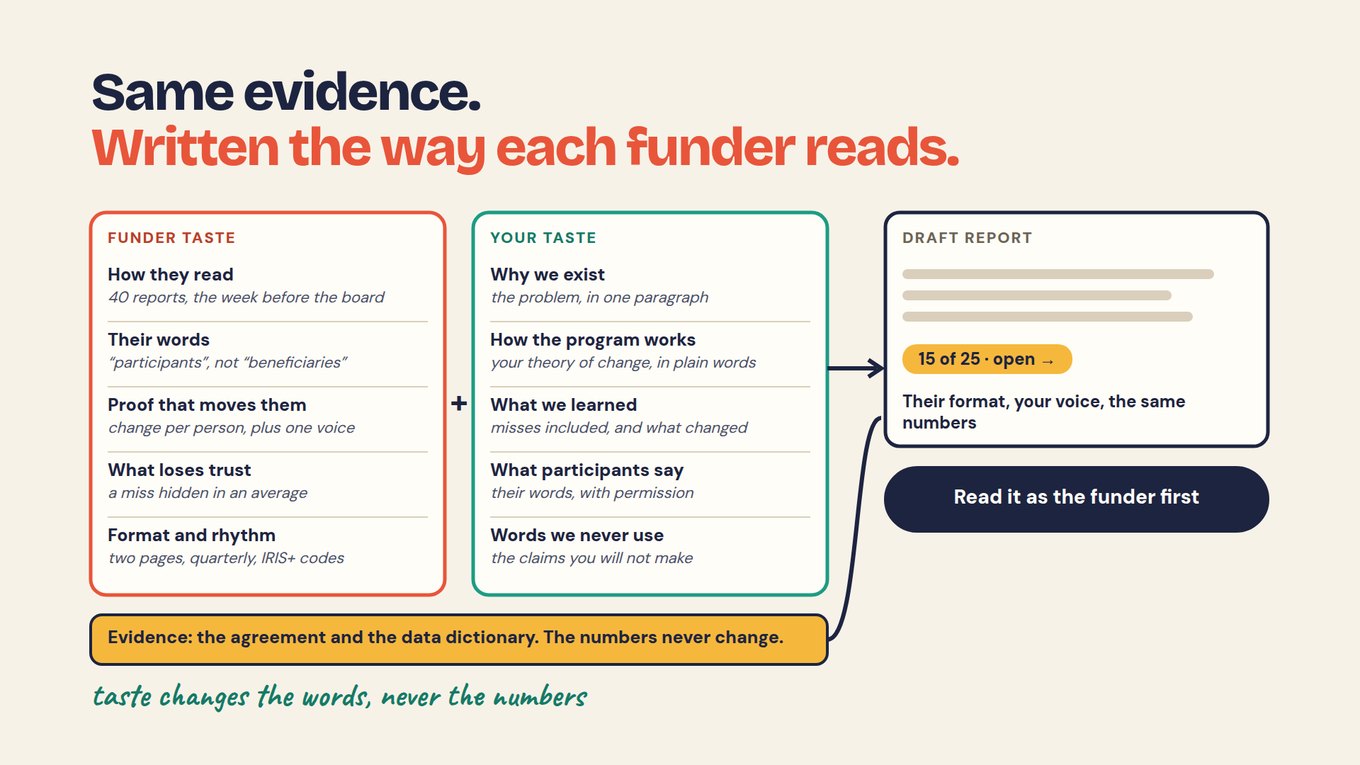
Keep the important caveat beside the result. In the fictional exercise, 15 of 25 respondents report skill use; 15 of the 40 completers have no follow-up answer. “60% succeeded” would hide both the definition and the missing evidence.
Use stories to explain, not replace, the finding.
A learner’s account can make a barrier understandable. Preserve their meaning and use it only with the appropriate permission for that audience. One account does not establish how common the experience is. Do not manufacture a quote to make the report feel human.
If the report includes finance, check that the statement covers the same period and scope. An underspend might reflect delayed delivery rather than efficiency. Use the responsible reviewer’s explanation rather than letting a writing assistant invent one.
Keep a report distinct from a live dashboard.
A dashboard can show current information. A submitted report needs a recognizable version and the evidence used at approval. If a correction changes a material finding, preserve the earlier release and explain the revision.
Your output
A brief with the audience, question, period, evidence version, major findings, limitations and reviewers. If those are clear, draft and check the report. Leave missing sections explicitly unresolved.
Bring financial and program evidence together carefully
Use the financial statement approved for the same reporting scope. Show the agreed budget, expenditure, material variances and an explanation of what they mean for delivery. If a funder requires restricted-fund balances, commitments or a particular accounting basis, follow those instructions and have the responsible finance reviewer check them.
An underspend is not automatically efficiency. It might reflect a delayed activity, a vacancy or an invoice not yet recorded. An overspend does not by itself establish poor performance. Explain the reason and whether the plan or permission needs to change.
Cost per participant can be useful only when the cost and participant definitions are clear. State which costs are included and whether the denominator counts starters, completers or people with a measured outcome. Do not compare programs using different periods or cost boundaries as if they were equivalent.
For a partner report, the survey narrative, uploaded financial statement and social audit may describe different periods. Check their dates before combining them. A Q3 update with a Q2 financial attachment should become a clarification request, not a silently completed Q3 report.
Add this to your plan
Record what you decided in this chapter in the same working evidence plan you started in Foundations, so definitions, sources and checks stay in one place.