


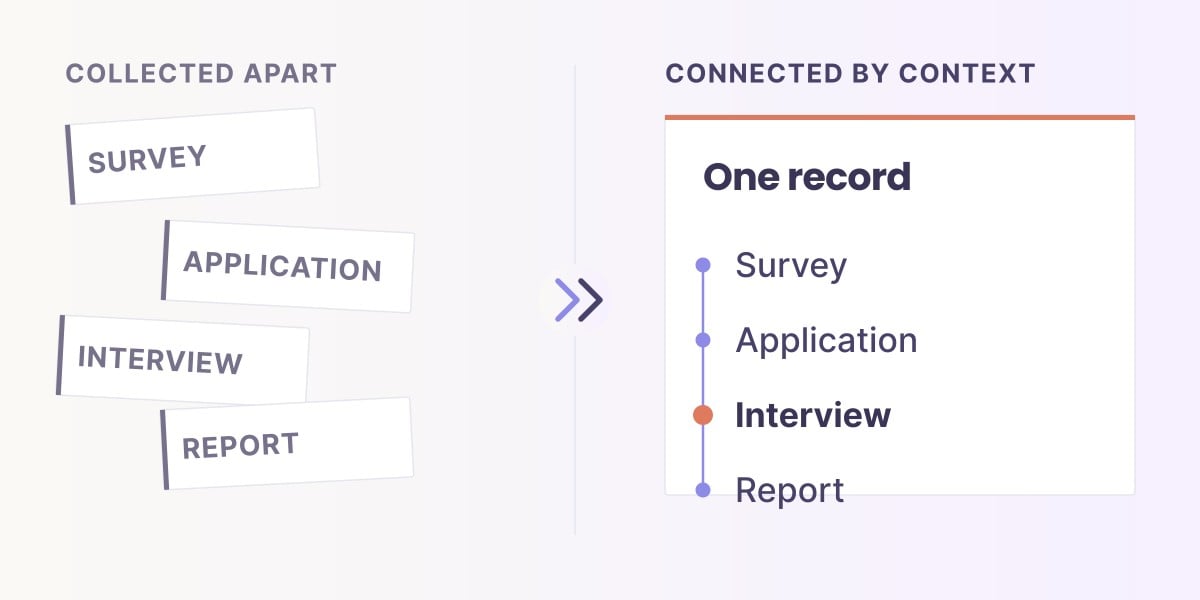
What is mixed-mode data collection?
Mixed-mode data collection uses more than one way to collect responses, such as web questionnaires, telephone interviews, paper forms or in-person interviews. It can help a study reach people with different access needs and preferences.
The design involves more than combining files. Collection modes can affect who responds and how questions are understood or answered. Plan the questionnaire, contact process, record structure and analysis together.
Mixed-mode is different from mixed methods. Mixed-mode concerns how data is collected; mixed methods combines quantitative and qualitative approaches to answer a research question. A project can use both, but one does not automatically imply the other.
Concurrent and sequential mixed-mode designs
Scroll horizontally to see all columns →
| Design | Example | Planning issue |
|---|---|---|
| Concurrent | Offer a web or paper questionnaire during the same collection window. | Manage duplicate returns and understand who chooses each mode. |
| Sequential | Invite web responses first, then offer telephone follow-up to nonrespondents. | Track eligibility, contact attempts and when the follow-up begins. |
| Mode assigned by practical need | Use an interviewer where an accessible self-completion option is unsuitable. | Document the reason and consider comparability. |
Distinguish the invitation channel from the response mode. An SMS that links to a web questionnaire is a text invitation to web collection. A conversation conducted entirely through text is a different collection arrangement. Store both details when they matter to the analysis.
When is more than one mode useful?
Consider mixed-mode collection when a single approach excludes or burdens part of the intended audience. Internet access, language, literacy, disability, availability and trust can affect participation. The appropriate combination depends on the people and the question.
Additional modes also have costs: interviewer time, printing, transcription, coordination and quality checks. More modes do not guarantee representative coverage or a higher-quality result. Compare the expected benefit with the operational work and measurement risks.
Start by identifying who is missing from the current approach and why. A second channel that reaches the same people may add little. A targeted alternative may be more useful than offering every mode to everyone.
Why can the collection mode change answers?
Speaking to an interviewer and answering privately on a screen are different experiences. Respondents may hear rather than read options, have different opportunities to review them or feel differently about disclosing sensitive information.
Pew Research Center’s telephone-versus-web experiment found mode differences for some questions. See its mode-effects research. The practical lesson is to test the collection arrangement rather than assume matching labels make responses equivalent.
Differences between modes can also reflect different respondents. If the telephone follow-up reaches people who ignored a web invitation, their answers may differ because of who they are, how they were asked or both. A simple comparison of web and telephone averages does not separate those explanations.
Design questions that work across the selected modes
Keep the intended concept, response scale and reference period consistent where comparison is required. Adapt presentation carefully: a large visual matrix may be difficult to administer by telephone, and complex skip instructions may be difficult on paper.
Prepare interviewer instructions and data-entry rules. An interviewer should not improvise explanations that change the question. For paper forms, define how unclear marks, multiple selections and missing answers will be recorded.
Pretest each mode with relevant users. Check comprehension, burden, navigation and accessibility. Record questionnaire versions and any differences that remain. The U.S. Census Bureau’s survey-methods overview describes adapting and testing collection across modes, languages and cultures.
Choose the record structure around the study
A longitudinal participant study may need a stable linking method across waves and modes. A one-time anonymous survey may not. An organization-level return may need a member or site reference rather than a person identifier.
Separate the unit being studied from the submission. One person or organization can have several legitimate submissions across periods, and an accidental duplicate can arrive within one period. A stable identifier helps with matching but does not eliminate all duplicate or correction work.
Useful collection fields can include the study reference, period, response mode, invitation channel, questionnaire version, collection date, source file or batch and review status. Add personal identifiers only where necessary and appropriate for the design.
Across a federated network, agree on the limited common fields needed for aggregation while allowing relevant local questions. A shared data dictionary should define the measure, population, period and treatment of missing data. Do not force unrelated local measures into one common field.
Reconcile submissions without silently overwriting evidence
Decide how to handle someone who submits both a paper and web response. The rule may depend on whether one is a correction, whether either is incomplete and the study protocol. Keep the decision and original source traceable.
Do not automatically assume the latest timestamp is the best answer. A paper form may be entered later than it was completed. Distinguish collection time from import time so the order of data entry does not rewrite the response history.
Review unmatched references, duplicate keys and conflicting values. For anonymous collection, acknowledge the limits of duplicate detection rather than promising that every repeat respondent can be identified. Do not undermine an anonymity promise to improve matching.
Worked example: count respondents rather than files
Imagine a fictional network with 200 eligible members. It receives 100 web returns and 50 paper returns. Ten members submitted through both modes. After reviewing those duplicates under the agreed rule, there are 140 unique responding members, not 150.
Coverage is 140/200, or 70%, under that membership definition. The ten duplicate submissions remain in the audit record but do not count as ten extra members. If the paper returns contain incomplete questions, item-level denominators may be lower than 140.
Suppose the paper group gives different ratings from the web group. Investigate the member mix, timing and administration before concluding that the mode caused the difference. Record what can and cannot be inferred from this design.
Plan offline collection and imports explicitly
Paper collection, a device working without connectivity and a later file upload are different workflows. Check the actual capabilities and procedures required for each. Do not assume a platform supports offline capture or automatic synchronization because it accepts imported data.
For a device-based process, test interrupted connectivity, duplicate synchronization, lost access and version changes. For paper, test secure handling, transcription and verification. For imports, retain the source batch and a report of accepted, rejected and corrected rows.
Assign an owner to resolve exceptions before analysis. Clean collection rules can reduce errors, but they do not remove the need for review. The release of a new form version should not leave field teams collecting against an undocumented definition.
Analyze the combined data with the mode visible
Report response counts and relevant coverage by mode, along with missingness and exclusions. Check whether one mode is associated with particular groups or questionnaire versions. Keep the overall result and the underlying composition available for review.
For comments, distinguish verbatim responses from interviewer notes or transcribed summaries. A short interviewer summary is not equivalent to the respondent’s exact words. Preserve that source distinction when coding themes or quoting evidence.
If weighting or adjustment is required, use a method suited to the sample and purpose. Combining modes does not automatically justify a population estimate. Explain material limitations rather than presenting the combined total as inherently representative.
Test the full collection workflow
- Choose the audience and the reason for adding a mode.
- Test the questionnaire in each selected format.
- Define the common fields and appropriate linking method.
- Include a duplicate, late return, correction and unmatched record in the pilot.
- Reproduce the respondent and item-level counts.
- Review mode differences and the source of comments.
- Assign ownership for the next batch and unresolved exceptions.
Sopact’s collection, analysis and governance approach is relevant when the team needs to maintain evidence across these sources and periods. Verify which channels are supported directly and which require a configured import or other tool. Judge the workflow by whether the team can explain the combined result and keep it current.
For the next step, see quantitative data collection methods or longitudinal collection requirements. The course linked below provides the practical planning path.
Watch: collection and connected records
This Sopact Sense introduction discusses data collection with context and self-managed analysis. Apply record linking only where the study needs it; mixed-mode collection can also support anonymous or organization-level designs.
Frequently asked questions
Is mixed-mode the same as mixed methods?
No. Mixed-mode uses several collection modes. Mixed methods combines quantitative and qualitative approaches. A project can use either or both.
Does every mixed-mode survey need personal identifiers?
No. Choose the unit and linking method around the study. Anonymous and organization-level designs can be appropriate; personal follow-up requires its own justified arrangement.
Does one identifier eliminate duplicates?
No. It helps match records, but duplicate submissions, corrections and incorrect identifiers still require defined review rules.
Can mode affect the answers?
Yes. Administration and presentation can influence responses, and different modes may reach different people. Test the design and retain mode information in the analysis.
Does adding a mode always improve coverage?
No. It may help reach people missed by the initial approach, but the benefit depends on the audience and implementation. Check who actually participates.
