play icon for videos
Use case

Logic Model Template for Nonprofits | Sopact

Get a logic model template built for measurement — not compliance. Learn how Sopact Sense closes the Model-Measurement Gap before your next program cycle opens.

TABLE OF CONTENT

Author: Unmesh Sheth

Last Updated:

March 20, 2026

Founder & CEO of Sopact with 35 years of experience in data systems and AI

Logic Model Template for Nonprofits

Most nonprofits spend three hours in a planning meeting, agree on five outcomes, and fill in a logic model template. Twelve months later, the funder asks for evidence of progress — and the program team opens a spreadsheet with 847 rows of unlinked data, none of it organized to answer the questions the logic model raised. The model and the measurement system were never connected. That gap has a name: the Model-Measurement Gap.

The Model-Measurement Gap is the structural disconnect between what a nonprofit's logic model says it will track and what its data collection system actually captures. It is invisible at design time and expensive at reporting time. Every box filled in without a corresponding survey question or data field becomes a reporting debt that compounds with every program cycle.

This guide is a step-by-step walkthrough for building a logic model template that closes that gap from day one of program design — not a downloadable form you fill in and forget.

Ownable Concept — This Article
The Model-Measurement Gap
The structural disconnect between what a nonprofit's logic model says it will track and what its data collection system actually captures. Invisible at design time. Expensive at reporting time.
Logic Model Design Data Architecture Program Evaluation Outcome Measurement Sopact Sense
1
Define
Outcomes before forms
2
Collect
Architecture-first design
3
Analyze
Pre-post, disaggregated
4
Report
No reconciliation step
The Core Problem
Every logic model box filled in without a corresponding survey question or data field becomes a reporting debt that compounds with every program cycle. This article shows how to close the Model-Measurement Gap before your program opens enrollment.

Step 1: Define Your Program Before You Fill In Any Box

A logic model template is not a starting point. It is a documentation tool for decisions you have already made about whom you serve, what change you expect, and how you will know it happened. Filling in the template before those decisions are made produces a compliance artifact — a document that satisfies the grant requirement and generates no useful data.

Before opening any logic model template, answer three questions: Who is the target population and what is their specific starting condition? What is the shortest causal chain from your intervention to your intended outcome? Which outcomes are within your program's span of control versus which depend on factors you cannot influence? Programs that skip this step produce logic models where "improved economic mobility" appears in the outcomes column with no corresponding measurement instrument — the Model-Measurement Gap begins here.

Program Logic Model Template: The Five Elements

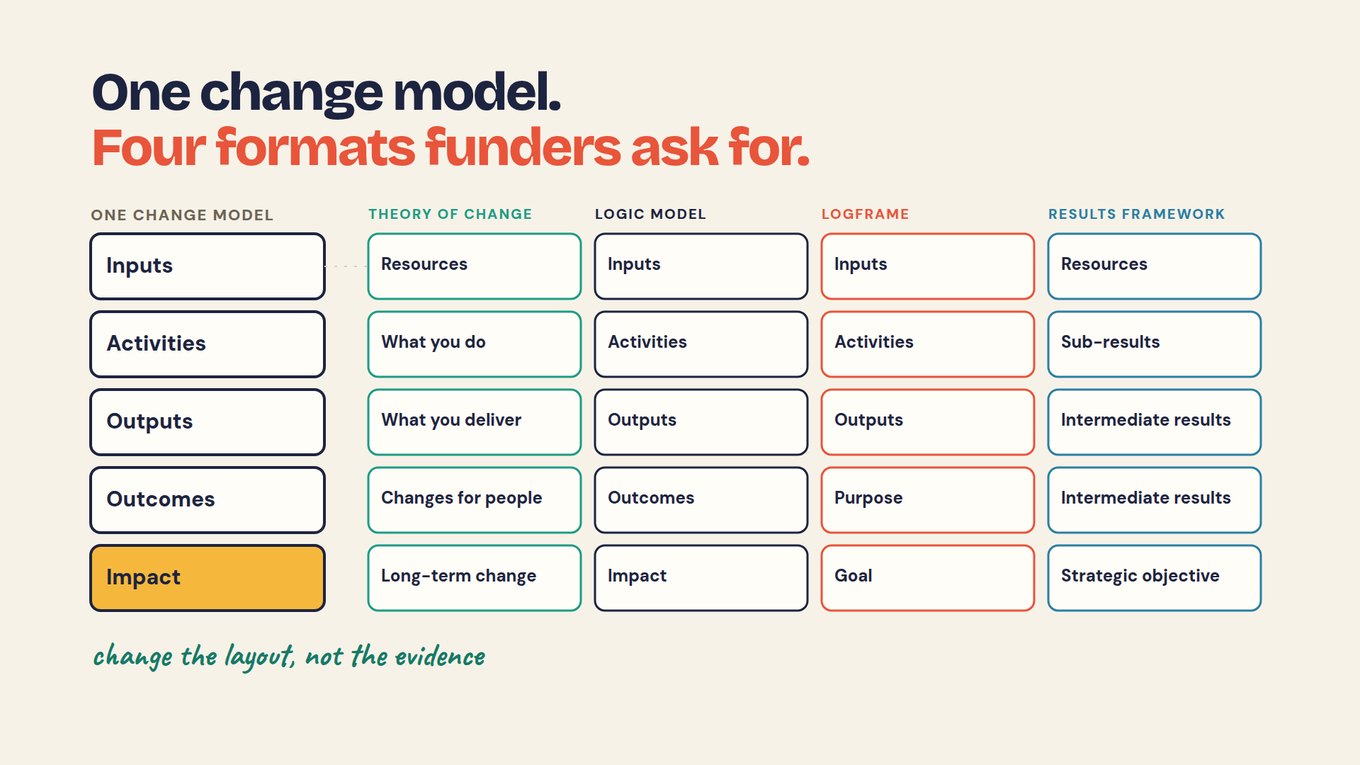
A program logic model template organizes program theory into five columns: Inputs, Activities, Outputs, Short-Term Outcomes, and Long-Term Outcomes. Each column answers a different question. Inputs = what resources do we deploy? Activities = what do we do? Outputs = how much did we do it? Short-term outcomes = what changed in participants within 90 days? Long-term outcomes = what changed in their lives over 12–36 months?

The column structure matters less than the causal arrows between them. If you cannot draw a plausible causal line from Activity A to Short-Term Outcome B, one of those boxes is wrong. Generic templates skip this validation step entirely. Sopact Sense builds the causal structure into the data collection instrument from the start — every outcome column has a corresponding intake question, follow-up survey, or milestone tracker attached before enrollment opens.

The Model-Measurement Gap: Why Every Static Template Eventually Fails

The Model-Measurement Gap emerges the moment a logic model is saved as a PDF. At that point, it becomes a theory document — and the program's actual data lives somewhere else: a separate intake form, a disconnected spreadsheet, a survey tool with no link to participant IDs. The model says "improved financial literacy." The spreadsheet has a column called "workshop attendance." These two facts are never connected.

The average nonprofit spends 11–14 days preparing a single funder impact report. Most of that time is not analysis — it is reconciliation: matching participant IDs across disconnected systems, manually verifying that survey respondents completed the program, estimating outcomes for participants who dropped out mid-cycle. Every hour of reconciliation is a direct consequence of a logic model that was never attached to a data architecture.

The Model-Measurement Gap compounds across cycles. In cycle one, a program team fills in the template, runs the program, and estimates outcomes from partial data. In cycle two, they cannot compare cohort one to cohort two because participant IDs were inconsistent. By cycle three, the logic model has been revised for the new funder — but the old data does not map to the new outcome language. Three years of program data, three incompatible measurement schemas. The logic model template was never the problem. The absence of a connected data architecture was.

Step 2: How Sopact Sense Builds Your Logic Model Architecture

Sopact Sense is not a template tool. It is a data collection platform where logic model structure is embedded into every form, survey, and stakeholder record from the first day of program design.

When a program team designs a new program in Sopact Sense, they define the outcome framework first — not the intake form. Every outcome in the logic model maps to a specific question type, collection cadence (baseline, midpoint, exit, follow-up), and disaggregation variable (gender, age group, geography, program type). The intake form is then generated from that framework — not built separately and later reconciled. This is the structural difference between a logic model that generates evidence and a logic model template that generates compliance documentation.

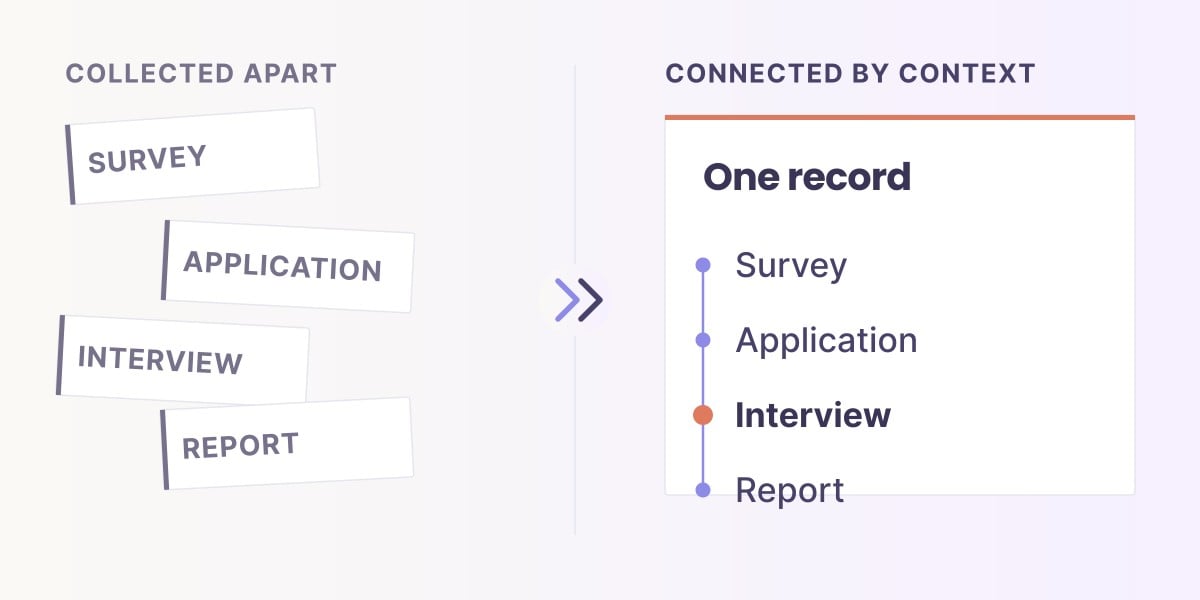
Unique stakeholder IDs are assigned at the point of first contact — enrollment, intake, or application — not added later from a spreadsheet export. Qualitative responses (open-ended survey answers, coach notes, narrative feedback) are collected in the same system, linked to the same stakeholder record, and available for disaggregation alongside quantitative indicators. When the reporting cycle opens, the data is already organized by logic model column. There is no "prepare data for the report" step, because the Model-Measurement Gap never opened.

See how nonprofit impact measurement applies logic model structure to longitudinal data collection in Sopact Sense.

Video The Logic Model Architecture Most Nonprofits Get Wrong
How connecting your logic model to data collection closes the Model-Measurement Gap before it starts. See Sopact Sense →

Sample Logic Model: What a Connected Architecture Looks Like

A sample logic model built in Sopact Sense for a workforce development program works like this. Inputs: staff hours, training curriculum, employer partnerships — each tagged as a resource type in the system. Activities: cohort training sessions, job coaching, employer introductions — each logged as a milestone event with a date and participant ID. Outputs: sessions completed, participants who attended 80%+ — automatically calculated from milestone logs, no manual counting. Short-term outcomes: participants reporting improved interviewing confidence — pulled directly from a 5-point Likert exit survey, question 3. Long-term outcomes: participants employed 90 days post-program — collected via automated follow-up survey sent through the same system.

Every row in that sample logic model has a corresponding data field in Sopact Sense. The Model-Measurement Gap is zero. When the funder asks for evidence, the program team runs a report — they do not spend two weeks reconstructing data from a spreadsheet. SurveyMonkey and Google Forms collect survey data in isolation; neither connects responses to a logic model framework or assigns persistent participant IDs across program cycles.

For organizations running multiple programs simultaneously, impact measurement and management shows how Sopact Sense handles portfolio-level logic model alignment.

Step 3: What Sopact Sense Produces From a Logic Model

1
Disconnected Data Systems
Logic model lives in a Word doc. Intake data lives in Google Forms. Survey results live in SurveyMonkey. No participant ID connects them. Reconciliation consumes 11–14 days per reporting cycle.
2
Retroactive Disaggregation Failure
A funder requests outcomes by gender in cycle three. The intake form never captured it. That data cannot be reconstructed. The equity analysis the funder needs does not exist.
3
Broken Longitudinal Comparison
Outcome language shifts between cycles when funders change. Cohort one data does not map to cohort two outcomes. Three years of program work, three incompatible measurement schemas.
4
Activities Listed as Outcomes
The outcomes column lists workshops delivered, sessions completed, participants enrolled. These are outputs. When reporting time arrives, there is no evidence of change — only evidence that activities happened.
How Logic Model Tools Compare
Capability Word Template / Gen AI Sopact Sense
Outcome–survey alignment Manual — team must build instruments separately after the logic model is approved Outcome framework drives survey design; instruments are built from logic model columns
Stakeholder IDs None — participant records exist in separate systems with no shared identifier Unique ID assigned at intake; links every survey response, milestone, and follow-up across cycles
Pre-post comparison Manual match from two separate spreadsheets; error-prone and time-consuming Automatic via persistent ID; baseline and exit responses linked to same record
Disaggregation Requires intake data to have captured it; often missing; cannot be added retroactively Any variable captured at intake available for disaggregation across all outcome data
Longitudinal comparison Breaks when outcome language changes; no consistent question wording across cycles Consistent instruments across cycles; cohort-to-cohort comparison is structural
Qualitative data Separate from quantitative; manual theming; no link to participant outcomes Collected in same system, linked to same record, analyzable alongside quantitative data
Reporting prep time 11–14 days per cycle for data reconciliation, matching, and formatting Data already organized by logic model column; no reconciliation step
What You Get
7 Deliverables a Connected Logic Model Produces Automatically
📋
Baseline Report
Demographics and starting conditions, disaggregated — from intake, not a separate survey
📊
Output Tracking Dashboard
Real-time session counts, enrollment, milestones — no manual data entry
📝
Outcome Survey Summary
Short-term outcomes from exit surveys with quant + qual data in one view
↔️
Pre-Post Comparison
Baseline vs exit scores automatically calculated via persistent stakeholder IDs
⚖️
Disaggregated Equity Analysis
All outcome data broken down by any demographic variable captured at intake
📈
Longitudinal Cohort Comparison
Cohort-to-cohort outcomes in consistent language — year-over-year learning, not re-explanation
Close the Model-Measurement Gap Before your next program cycle opens enrollment.
Build With Sopact Sense →

A logic model built in Sopact Sense produces seven distinct deliverables — automatically — because the data architecture was designed from the theory of change rather than assembled afterward.

Baseline report. Participant demographics and starting conditions, disaggregated by gender, age, geography, and program type — generated from intake data, not from a separate survey administered after the program begins.

Output tracking dashboard. Real-time counts of sessions delivered, participants enrolled, and milestones reached — no manual data entry after the fact.

Outcome survey summary. Short-term outcome results from exit surveys, with statistical summaries and qualitative theme extraction — both quantitative and qualitative data in one view, linked to the same participant records.

Pre-post comparison. Baseline scores versus exit scores for every participant who completed both instruments, with cohort-level aggregate trends — automatically calculated from matched survey responses via persistent stakeholder IDs.

Disaggregated equity analysis. All outcome data broken down by any demographic variable captured at intake — no retrofitting, no additional analysis step, no guessing about who was in which subgroup.

Longitudinal cohort comparison. Cohort one versus cohort two outcomes, using consistent logic model language and consistent question wording across both cycles — enabling year-over-year learning rather than year-over-year re-explanation.

Funder narrative package. Qualitative themes, representative participant quotes with consent flags, and quantitative highlights — assembled from the same data, formatted for grant reporting.

Organizations using a disconnected Word logic model template produce none of these automatically. Each requires weeks of manual work per reporting cycle.

The Gen AI Illusion in Logic Model Design

ChatGPT and similar AI tools can generate a logic model in 90 seconds. The result looks complete: five columns, plausible outcome language, inputs that match what funders expect to see. This is the Gen AI Illusion — the model looks like a measurement system, but it is a text document with no connection to how data will actually be collected.

Non-reproducible structure. Ask the same AI tool for a logic model for the same program on two different days and you will receive two different outcome frameworks. Neither is wrong. Neither is consistent. Funders comparing year-over-year reports will see different language for the same outcomes and request explanations you cannot provide.

No causal validation. AI tools generate plausible columns — they do not validate whether your causal chain is defensible against sector evidence. "Improved self-efficacy leads to long-term employment" may or may not hold for your population in your context. AI does not know because it cannot access your program data.

No data architecture. An AI-generated logic model template is a text file. It does not generate a survey instrument, a data collection schedule, a stakeholder ID system, or a disaggregation framework. The Model-Measurement Gap begins immediately upon use.

Disaggregation gaps surface two cycles later. AI-generated templates rarely specify how demographic variables will be captured. When a funder asks for outcomes broken down by gender in cycle three, the program discovers the intake form never asked for it. That data cannot be reconstructed retroactively.

The correct use of AI in logic model work is drafting initial outcome language and validating your theory of change against sector evidence — not generating a measurement architecture. Sopact Sense builds what AI tools cannot.

Step 4: What to Do After You Have a Logic Model

A logic model is not a finished product. It is a commitment to a measurement architecture. After finalizing the logic model framework in Sopact Sense, four actions complete the design before enrollment opens.

Assign collection ownership. For each outcome, specify who collects the data, which survey instrument captures it, and at what point in the program cycle. Outcome columns with no assigned collection owner become measurement gaps — and measurement gaps become funder conversations.

Set disaggregation variables upfront. Every demographic variable needed for equity reporting — gender, race/ethnicity, age group, income level, geography — must be captured in the intake form. It cannot be added retroactively without re-surveying participants who are already in the program.

Define the follow-up cadence. Long-term outcomes require follow-up surveys at 90 days, 6 months, or 12 months post-program. Design these instruments now and schedule them in Sopact Sense so they deploy automatically when each participant reaches those milestones.

Align language across funder reports. If a funder uses "economic mobility" and your logic model says "income increase," establish the crosswalk before the program opens. Changing outcome language mid-cycle breaks the longitudinal comparison that makes your data valuable. See nonprofit storytelling for translating consistent data into funder-specific narratives without rebuilding the underlying framework.

Don't build the logic model in isolation.
Sopact Sense connects your outcome framework to data collection before enrollment opens — so reporting season doesn't require reconciliation season.
Build With Sopact Sense →
🗂️
Your next logic model should generate evidence, not paperwork.

Sopact Sense closes the Model-Measurement Gap by building your outcome framework into the data collection architecture from day one — so every program cycle produces the seven deliverables your funders ask for automatically. No reconciliation. No retroactive disaggregation. No spreadsheet archaeology.

Step 5: Tips, Troubleshooting, and Common Mistakes

Limit outcomes to what your program directly causes. The most common logic model error is listing long-term systemic outcomes — reduced community poverty, improved regional health — that no single program can produce alone. Your logic model should stop at the boundary of your program's causal influence. A modest, evidence-supported outcome claim is more fundable than an ambitious, unmeasurable one.

Never copy a logic model template across different program types. A youth mentoring program and a workforce development program require different outcome frameworks, different survey instruments, and different disaggregation variables. Organizations that copy one template across programs produce data that cannot be compared at the portfolio level and cannot be aggregated for multi-program funders.

Activities are not outcomes. "Delivered 12 training sessions" is an output. "Participants reported increased confidence in financial planning" is a short-term outcome. Logic models that list activities in the outcomes column cannot produce evidence of change — they can only demonstrate that activities occurred, which satisfies no funder asking about impact.

Test your survey before the program opens. Pilot the intake and exit surveys with 5–10 participants before cohort one launches. Questions generating ambiguous responses produce ambiguous data — and ambiguous data cannot support outcome claims at reporting time, regardless of how well the logic model was designed.

Close the Model-Measurement Gap at design time. Every hour spent aligning logic model columns to survey questions before the program starts saves approximately eight hours of data reconciliation per reporting cycle. This is the operational reality for organizations that have rebuilt their measurement architecture after years of disconnected data. Social impact consulting teams at Sopact facilitate this alignment process with new clients in the first two weeks of onboarding.

Frequently Asked Questions

What is a logic model template?

A logic model template is a structured framework that maps a program's inputs, activities, outputs, and outcomes — the causal chain from resources deployed to change achieved. A standard template includes five columns: Inputs, Activities, Outputs, Short-Term Outcomes, and Long-Term Outcomes. The template becomes a measurement tool only when each column is connected to a corresponding data collection instrument. Without that connection, it is a theory document that cannot produce evidence.

What is the best logic model template for nonprofits?

The best logic model template for nonprofits is one embedded in a data collection platform from the point of program design — not a static Word document filled in during a planning meeting. Templates built in disconnected tools create the Model-Measurement Gap: the outcomes column describes what you expect to change, but no data collection system is aligned to capture it. Sopact Sense builds outcome frameworks directly into survey design, intake forms, and stakeholder tracking before enrollment opens.

What is a sample logic model?

A sample logic model for a workforce development program includes: Inputs (staff, curriculum, employer network), Activities (cohort training, job coaching, employer introductions), Outputs (sessions delivered, 80%+ attendance completions), Short-Term Outcomes (improved interview confidence measured at exit), and Long-Term Outcomes (employment at 90 days post-program measured via follow-up survey). Every element in a well-designed sample logic model has a corresponding data collection instrument — not just a label in a table.

What is a program logic model template?

A program logic model template is a logic model format designed for a specific program type — workforce development, youth services, health education — rather than a generic five-column form. Program-specific templates include outcome language, measurement indicators, and collection cadences typical for that program context. Sopact Sense generates program-specific frameworks from a team's theory of change before any data collection instrument is designed.

Is there a logic model template in Word?

Yes — Word-format logic model templates are widely available from foundations, university extension programs, and nonprofit support organizations. Word templates are useful for funder-required logic model submissions. Their structural limitation is that they cannot connect to a data collection system — filling in a Word logic model template produces a planning document, not a measurement architecture. For funder compliance, a Word template is sufficient; for program measurement, it must be followed by a connected data platform.

What is a logic model template for Word specifically?

A logic model template for Word is a .docx file with a five-column table structure filled in during planning meetings. Word templates satisfy grant requirements for logic model documentation. They cannot generate survey instruments, assign stakeholder IDs, or produce disaggregated outcome data. Many programs use a Word template for funder submission and Sopact Sense as the data architecture that operationalizes it — the two serve different functions.

Can I use a logic model template in Word and also use Sopact Sense?

Yes. Many programs use a Word-format logic model for funder submission and Sopact Sense as the data collection architecture that generates evidence. The Word document satisfies the grant requirement; Sopact Sense captures proof that the outcomes actually occurred. The key is ensuring the outcome language in the Word template matches the survey questions designed in Sopact Sense — that alignment closes the Model-Measurement Gap.

How does AI help with logic model design?

AI tools including ChatGPT and Gemini can generate plausible logic model structures, draft outcome language, and suggest activities based on program type — useful starting points for teams new to the framework. The limitation is that AI-generated logic models have no connection to data collection architecture. Use AI to draft theory; use Sopact Sense to build the evidence architecture. AI-generated templates also produce inconsistent structures across sessions, making year-over-year comparison unreliable.

What is the Model-Measurement Gap?

The Model-Measurement Gap is the structural disconnect between what a nonprofit's logic model says it will track and what its data collection system actually captures. It is invisible at design time and expensive at reporting time. Sopact Sense closes the gap by building logic model outcome columns directly into survey instruments, collection cadences, and stakeholder ID systems before program enrollment opens — eliminating the retroactive reconciliation that costs nonprofits weeks of staff time per reporting cycle.

How many outcomes should a logic model template include?

Most program logic models include 3–5 short-term outcomes and 1–3 long-term outcomes. More than five short-term outcomes usually signals the program is measuring everything rather than the specific changes caused by its specific activities. Fewer than two short-term outcomes usually means the team has not yet specified what change the program produces in participants. Each outcome should have exactly one primary measurement instrument assigned to it before the program opens.

What is the difference between outputs and outcomes in a logic model?

Outputs measure what a program did: sessions delivered, participants enrolled, workshops completed. Outcomes measure what changed in participants as a result. "Delivered 200 hours of financial literacy training" is an output. "78% of participants reported making a savings plan for the first time" is a short-term outcome. Logic models that list outputs in the outcome column cannot produce evidence of change — they demonstrate only that activities occurred.

How do I adapt a logic model template for different funders?

Different funders use different outcome language for the same program results. The correct approach is to build one logic model in Sopact Sense with consistent measurement instruments, then create a crosswalk document mapping your terminology to each funder's preferred language. Rebuilding the logic model for each funder breaks longitudinal measurement and prevents year-over-year comparison — which is the data asset that makes your program increasingly valuable to funders over time.

TABLE OF CONTENT

Author: Unmesh Sheth

Last Updated:

March 20, 2026

Founder & CEO of Sopact with 35 years of experience in data systems and AI

Logic Model Template — AI Builder | Sopact
⚡ AI-Powered Builder

Logic Model TemplateSopact Sense

Turn complex programs into measurable, accountable results — design your pathway from resources to impact with connected logic.

A Logic Model Template bridges the gap between vision and evidence. It converts strategy into structure, linking resources, activities, and measurable outcomes in one clear line of sight.

Traditional templates stop at the design stage — pretty charts in Word or Excel that never connect to how data is actually collected. The Model-Measurement Gap opens the moment your logic model is saved as a PDF and your data lives somewhere else.

Sopact Sense closes that gap by embedding your logic model structure directly into your data collection architecture — so every outcome column has a corresponding survey instrument, a collection cadence, and a stakeholder ID attached before enrollment opens.

5 Key Components
100% Data Connected
Continuously Updated
Describe your program before filling in any column. Who you serve, what you do, and what change you expect.

✨ Start with Your Logic Model Statement

📋 What makes a strong logic model statement?
A clear statement describing: WHO you serve, WHAT you do, and WHAT CHANGE you expect to see — with enough specificity for AI to generate a measurement-ready framework.
"We provide skills training to unemployed youth aged 18-24, helping them gain technical certifications and secure employment in the tech industry, ultimately improving their economic stability and quality of life."
0/1000
Each column is editable. Add or remove items, or let AI generate the full framework from your statement above.
📦 Inputs Resources needed
⚙️ Activities What you do
📊 Outputs Countable results
🎯 Outcomes Changes in behavior
🚀 Impact Long-term change
What must be true for this logic model to hold? AI will populate these from your statement.
Key Assumptions
External Factors
Risks & Mitigation
💾
Ready to Save or Export?
Logic model updates automatically as you edit

Build Your AI-Powered Impact Strategy in Minutes, Not Months

This interactive guide walks you through creating both your Impact Statement and complete Data Strategy — with AI-driven recommendations tailored to your program.

  • Use the Impact Statement Builder to craft measurable statements using the proven formula: [specific outcome] for [stakeholder group] through [intervention] measured by [metrics + feedback]
  • Design your Data Strategy with the 12-question wizard that maps Contact objects, forms, Intelligent Cell configurations, and workflow automation — exportable as an Excel blueprint
  • See real examples from workforce training, maternal health, and sustainability programs showing how statements translate into clean data collection
  • Close the Model-Measurement Gap by building logic model outcome columns directly into your survey instruments before enrollment opens
  • Understand continuous feedback loops where programs discover what metrics actually predict outcomes — reshaping strategy in real time
What You'll Get: A complete Impact Statement using Sopact's proven formula, a downloadable Excel Data Strategy Blueprint covering Contact structures, form configurations, Intelligent Suite recommendations (Cell, Row, Column, Grid), and workflow automation — ready to implement independently or fast-track with Sopact Sense.
TABLE OF CONTENT

Author: Unmesh Sheth

Last Updated:

March 20, 2026

Founder & CEO of Sopact with 35 years of experience in data systems and AI