


What is a stakeholder analysis tool?
A stakeholder analysis tool helps a team organize relevant people and groups, assess their needs and influence, and plan appropriate involvement. It may be a spreadsheet, a visual mapping workspace or software that also manages recurring feedback and evidence. The right choice depends on the work you need to maintain.
A diagram can be enough for a focused workshop. A recurring program may need a register, source records, access controls and a history of reviewed decisions. Do not buy the most elaborate system before identifying which part of the current process creates difficulty.
This guide focuses on choosing and testing a tool. For the assessment itself, start with stakeholder analysis; for the visual method, use the mapping guide.
Choose the type of tool around the job
Scroll horizontally to see all columns →
| Approach | Useful starting point | What to check |
|---|---|---|
| Spreadsheet or simple register | A manageable list, assessment and action plan | Version control, access and responsibility for keeping it current |
| Collaborative mapping workspace | A workshop to discuss influence, interest and relationships | How reasons, evidence and later changes stay with the map |
| Dedicated stakeholder management software | Ongoing interactions, commitments, assessment and reporting | Fit with the engagement process, permissions and implementation capacity |
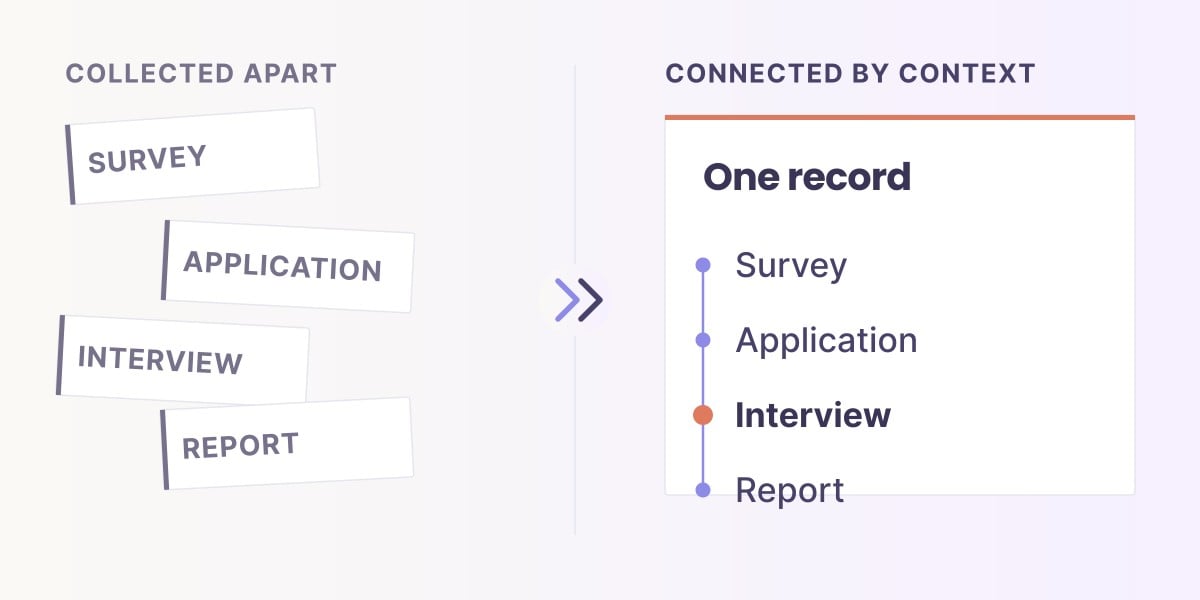
| Connected collection and analysis workflow | Recurring surveys, documents and local returns that need shared context | Definitions, record relationships, source review and links to the engagement plan |
These categories overlap. Miro offers stakeholder analysis and mapping templates; Borealis documents stakeholder assessment and mapping within its engagement software. Evaluate current capabilities directly rather than assuming every mapping product only draws a static chart. Miro templates; Borealis engagement features.
Define the information the analysis needs
A useful assessment distinguishes role, influence, interest, the effect of the decision on the group and participation needs. Keep the reason for each judgment, the source and the review date. A numerical score without that context is difficult to challenge or update responsibly.
Support the level of identity the work needs. A network may need organizations, branches and contacts as related but separate records. A confidential employee survey may require group-level evidence without individual identification. A tool should not force every contribution into the same personal-record model.
For recurring evidence, keep the period and source with each contribution. A new contact should not inherit an earlier person's opinion simply because both work at the same organization. Equally, a contact change should not erase the organization's operational history.
Requirements worth testing
Scroll horizontally to see all columns →
| Requirement | Practical test |
|---|---|
| Clear assessment criteria | Define influence and interest separately and record an unknown rather than forcing a score. |
| Source context | Open the evidence behind a finding and identify the relevant group, period and reviewer. |
| Appropriate relationships | Keep an organization, two sites and their contacts distinct while linking relevant evidence. |
| History and correction | Correct one assessment without silently losing the previous version and its reason. |
| Coverage | Identify a group that has not contributed rather than presenting it as neutral. |
| Access | Show that a restricted comment is unavailable to an unauthorized viewer. |
| Export and portability | Export the information needed to understand the assessment, not only a picture of the map. |
| Operational ownership | Let the responsible team maintain routine definitions and review dates after setup. |
Ask the supplier to distinguish native features, configured behavior and work that requires an integration. That distinction affects cost, ownership and the time needed to make the workflow reliable.
Do not score influence from sentiment alone
A tool may organize comments or suggest that an issue needs review. That is different from establishing how much influence a stakeholder has. A negative comment can come from a supportive person who has identified a real problem; a positive comment does not establish decision-making power.
Use role, authority, operational dependencies and the decision context when assessing influence. Use expressed concerns and involvement to understand interest, while acknowledging gaps. Do not treat silence as low interest without checking whether the person had a practical opportunity to contribute.
If AI suggests an assessment, require it to show the evidence and uncertainty. Give reviewers a clear way to reject or revise the suggestion. Automatic changes to a power-interest map are not a substitute for a responsible assessment and should not be assumed to be a standard product feature.
Run a pilot with difficult cases
Use a small, representative decision rather than an entire contact database. For example, test a network reporting change with a central sponsor, large and small branches, reporting coordinators and the teams using the resulting data.
Include evidence that makes interpretation less straightforward:
- A group with no recent response.
- Two contacts at the same organization with different concerns.
- A changed responsibility that affects influence.
- A positive rating accompanied by a critical comment.
- A revised document that corrects an earlier figure.
- A confidential statement that must not appear in the shared summary.
Ask the team to complete one assessment, inspect the evidence, agree an engagement action and later revise a finding. Record where manual work was necessary. A clean demonstration with only supportive, complete responses will not reveal these limitations.
For the resulting activities and owners, connect the assessment to your engagement plan. The map should help the team involve people appropriately, not become another output maintained separately from the work.
A worked acceptance check
Imagine a fictional pilot with 12 stakeholder groups. The team has recent evidence for eight, older evidence for two and no direct input from two. A useful report shows those distinctions; it does not claim current input from all 12.
One group is marked as influential because its representative can approve the operating budget. A later comment criticizes the form. The criticism may change the engagement approach, but it does not by itself change the representative's budget authority.
Another group has little formal authority but will do most of the data-entry work. Its experience should influence the collection design even if it appears in a lower-power quadrant. The tool must allow the team to record that rationale rather than allocating all attention automatically to the highest score.
Choose acceptance criteria before evaluating the demonstration. For example: authorized reviewers can inspect each placement's rationale; missing groups remain visible; restricted input does not appear in a general export; and the team can reproduce the reviewed version of the assessment. Measure those outcomes rather than the number of features shown.
Compare the full cost of ownership
Include subscription, implementation, data preparation, access configuration, training, integrations and ongoing review. Also consider the cost of maintaining duplicate information in several tools. The cheapest subscription may create more recurring work, but a larger platform may add administration the team does not need.
Use a simple planning estimate: expected internal setup days multiplied by the relevant daily cost, plus external setup costs and the first year's software and support. Add recurring administration and review effort separately. Keep assumptions visible rather than presenting an invented savings figure.
Ask who will own routine changes. If every new group or question needs a consultant, that affects a growing team's ability to adapt. If everyone can change definitions without review, comparisons may become inconsistent. Look for a workable balance between team control and shared rules.
Where Sopact fits
Sopact is relevant when the main challenge is collecting and analyzing recurring stakeholder evidence while keeping context, definitions and access under the operational team's control. It should be evaluated on that workflow rather than assumed to replace every visual mapping or relationship-management function.
Bring one collection process to the evaluation: several stakeholder groups, different local inputs, shared fields needed for comparison and a decision the team must make. Test how comments and documents are reviewed, how sources remain accessible to the right people and how changes are governed.
Where local forms differ, agree a small shared core and a data dictionary. Keep role-specific questions where they are useful. The goal is comparable evidence for the decisions that need it, not identical questionnaires imposed on every group.
Use the Membership & Networks course to prepare the workflow. For the questions that feed the assessment, use the stakeholder survey guide.
Frequently asked questions
Can a spreadsheet be a stakeholder analysis tool?
Yes. It can hold a useful assessment, rationale and action plan for a manageable scope. Review access, versions and maintenance responsibilities before deciding that more software is needed.
Is a stakeholder mapping tool enough?
It may be enough for a focused visual workshop. Recurring work may also need source evidence, history, permissions and reporting. Choose around the process you need to maintain.
Should an AI tool automatically rank stakeholders?
Do not rely on an unexplained automatic ranking. Influence, interests and consequences need context and human review. Require evidence, uncertainty and a way to revise any suggestion.
Do feedback and mapping have to be in the same system?
No. They need a dependable connection and clear ownership. An integration or linked evidence register may work if reviewers can inspect the right sources and maintain the assessment without excessive duplication.
What is the best first buying test?
Run one real decision with mixed evidence, a missing group, a correction and an access restriction. Check whether the team can explain and maintain the assessment from collection through follow-up.
