


What is a stakeholder engagement strategy?
A stakeholder engagement strategy sets the purpose, priorities and principles for how an organization involves people affected by its work. It explains which decisions need participation, what influence participants can have, how resources will be allocated and how the organization will learn from the results.
The strategy provides direction for individual engagement plans. It helps a growing organization avoid asking the same groups for similar information, promising more influence than it can offer or collecting feedback without a responsible response.
It is also a set of choices. A business with customers, employees and delivery partners cannot use one survey or one engagement method for every relationship. The strategy establishes consistent commitments while allowing teams to adapt collection to the people and decisions involved.
Begin with the decisions engagement should improve
Identify the decisions where outside experience or distributed knowledge can improve the work. Examples include designing a member service, changing partner reporting, prioritizing customer improvements or revising an employee process. State why participation is useful for each decision.
Then decide what participants can influence. Are you seeking information, testing options, developing an approach together or sharing a decision? An honest boundary matters more than choosing the most ambitious label.
For example, a central team may need comparable network data but still allow local contributors to shape the collection route and questions used to explain exceptions. This is a real opportunity to improve the process even if the reporting obligation itself is fixed.
Do not make agreement the only sign of success. People may understand a decision and still disagree with it. The strategy should support clear reasoning, appropriate participation and responsible follow-through rather than pressure to produce favorable feedback.
Prioritize by consequences and decision needs
Use a stakeholder analysis to identify groups, their needs, influence and the effects of the work on them. Prioritization should consider consequences, not only formal power or the volume of comments received.
A group with limited influence can be deeply affected by a change. An accessible senior contact may not know the experience of the people entering data or using a service. Reserve effort for understanding those missing perspectives.
Scroll horizontally to see all columns →
| Strategic question | Implication for effort |
|---|---|
| Who could be materially affected? | Provide an appropriate opportunity to contribute, even when the group has little formal power. |
| Whose knowledge is needed to make the decision? | Use methods that let people explain practical constraints and alternatives. |
| Who is missing from current evidence? | Investigate access, timing and representation before collecting more from familiar contacts. |
| What can the organization actually change? | Focus participation on real choices and explain fixed constraints. |
| Who needs an update rather than another request? | Reduce unnecessary collection and make the existing response easier to find. |
A stakeholder map can help discuss these choices. Keep the reasoning behind the map and review it when the decision context changes.
Choose commitments that teams can carry out
Translate broad principles into workable commitments. You do not need to turn every value into a single numerical score. Some commitments are best reviewed through a documented process, examples and participant experience.
Scroll horizontally to see all columns →
| Principle | Working commitment | Evidence for review |
|---|---|---|
| Clarity | Explain the decision, constraints and intended use of input before collection. | Invitations, participant questions and a check of understanding |
| Access | Offer appropriate routes for groups whose circumstances differ. | Coverage by group and documented barriers |
| Proportionate collection | Ask only for information needed for a defined purpose. | Question review, repeated requests and contributor workload |
| Accountability | Name who will review input and respond to material findings. | Decision records, owners and follow-up |
| Care with information | Explain and maintain appropriate access to contributions. | Access settings, approved summaries and correction handling |
Set commitments that can be sustained. A promise to respond personally to every anonymous survey answer is not workable. A promise to publish a group-level response by an agreed date may be, with a separate route for individual support requests.
Set shared rules and allow local methods
For a federated organization, consistency should come from the meaning of shared information and the commitments to contributors. It does not require every site or chapter to use an identical form.
Agree a small core needed for network-level decisions: relevant group context, period, measure definitions and eligibility rules. Local teams can collect additional information for their own decisions. A data dictionary should explain units, sources, missing values and how changes are handled.
For example, a network may compare completed activities across chapters while allowing each chapter to ask its own improvement questions. If activities differ substantially, the central report should explain the categories or avoid a misleading total. A shared field name alone cannot create comparability.
Collect stable organization details once and update changing information when appropriate. Keep identified operational records distinct from anonymous feedback when confidentiality is needed. This allows a common governance approach without requiring a permanent personal profile for every contributor.
Fund the complete process, including analysis and response
A strategy needs enough capacity to do something with the input it requests. Budget for preparation, accessible collection, analysis, clarification, decisions and reporting back. Software cost is only part of the commitment.
Assign a central owner for shared principles and definitions, local owners for the engagement work and decision owners for actions. In a small organization these may be the same people. Make the responsibilities explicit so a submitted comment does not become everybody's responsibility and nobody's task.
When resources are limited, choose a smaller decision to engage on well. Reusing relevant recent evidence or holding a focused pilot may be more useful than launching another broad survey that the team cannot review.
The operational details belong in a stakeholder engagement plan. Use the editable template to assign activities, owners and response dates.
Worked strategy: a growing professional network
A fictional network has 40 local groups. Central staff want reliable information about activity and member experience, but local groups receive overlapping requests from different teams. Larger groups respond regularly; smaller groups contribute less often.
The strategy sets three priorities for the next reporting cycle:
- Reduce duplicate requests. Review the central question list, reuse current registration context and remove fields without a clear decision purpose.
- Improve coverage of different operating conditions. Test collection with small and large groups and offer a suitable alternative where the standard route creates a barrier.
- Return something useful. Give contributors a reviewed summary and explain the actions taken from their input.
The central team owns the shared definitions and combined report. Local groups choose relevant examples and additional questions. A named review owner checks evidence and escalates findings to the person who can decide.
Suppose 28 groups submit a return, compared with 24 previously. That is an improvement in submission coverage from 60% to 70%, but it is not enough to conclude that the relationship has improved. Check whether smaller groups are better represented, whether the data answers the intended questions and whether contributors received a useful response.
If collection becomes easier but the central team still cannot explain how findings influenced decisions, the next improvement should focus on review and accountability rather than sending more reminders.
Use a balanced review, not one engagement score
Choose a small set of measures that reflect the strategy's commitments. Combine operational evidence with participant feedback and keep the denominator visible.
- Participation coverage: contributing groups divided by eligible groups, with important segments shown separately.
- Evidence usefulness: whether the collected information answered the decision question and which gaps remained.
- Response delivery: whether promised summaries or individual responses were provided as agreed.
- Action follow-through: agreed actions completed or reviewed by the due date, with delayed actions explained.
- Participant experience: whether contributors understood the purpose and felt able to participate appropriately.
Do not use a simple issues-addressed percentage without defining “addressed.” Acknowledged, action agreed and resolved are different states. Nor should a trust claim rely on an automated sentiment label alone; ask relevant questions and examine the context.
Use these findings to revise the strategy at meaningful decision points. ONS guidance recommends revisiting stakeholder assessments as organizational priorities and work evolve. Choose a review rhythm that your team can maintain. Source: ONS stakeholder mapping guidance.
Where connected data and AI fit
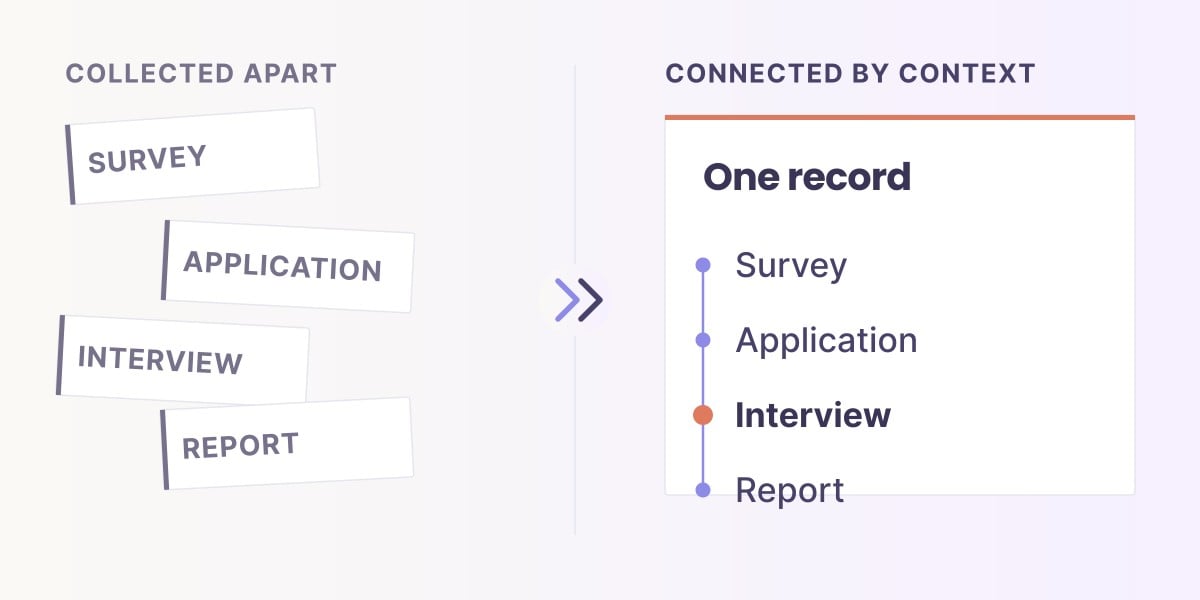
The technology should serve the strategy. A connected workflow can help retain group and period context, bring comments and documents into review and make recurring comparisons easier to maintain. It cannot decide the organization's participation commitments or create authority to act on a finding.
Sopact's relevant differentiation is a collection, analysis and governance workflow that operational teams can manage. Test how routine questions and definitions change, how reviewers inspect evidence and how access is controlled. Confirm the exact integrations and action-management arrangements needed for your process.
AI can assist with organizing a growing volume of comments and preparing summaries. Review the sources, contradictory views and missing groups. A strategy does not manage itself because a dashboard updates, and a repeated AI output is not proof of a sound interpretation.
For the practical course, continue to Membership & Networks. Begin with one recurring collection and review process, then expand after the team can explain what it learned and what it did with that learning.
Frequently asked questions
What belongs in a stakeholder engagement strategy?
Include the purpose, decisions requiring participation, relevant groups, principles, decision rights, resources, evidence approach and process for learning and responding.
How is strategy different from a stakeholder engagement plan?
Strategy explains priorities and commitments. A plan turns them into specific activities, responsibilities, dates and responses. The plan should be traceable to the strategy's purpose.
Should we prioritize only influential stakeholders?
No. Consider how strongly people are affected, whose knowledge is needed and which groups are missing. Limited formal influence does not make a group's needs unimportant.
Can the same strategy work across different sites?
Yes, if shared commitments and definitions are clear while local methods can fit different circumstances. Standardize the information needed for comparison rather than every question.
Does every principle need a numerical KPI?
No. Use numbers where they are meaningful and combine them with evidence of decisions, process quality and participant experience. Avoid a score that hides the reason for a judgment.
