play icon for videos
Use case

Social Impact Real Estate: Investing in Properties with Purpose

Social impact real estate generates measurable social outcomes alongside financial returns. Learn investment strategies, measurement frameworks, and AI-native tools.

TABLEΒ OFΒ CONTENT

Author: Unmesh Sheth

Last Updated:

March 1, 2026

Founder & CEO of Sopact with 35 years of experience in data systems and AI

Social Impact Real Estate: Investing in Properties with Purpose

Social impact real estate is real estate investment that intentionally generates measurable social and environmental benefits alongside financial returns β€” targeting affordable housing, community revitalization, and sustainable development. Unlike traditional real estate investing that optimizes purely for yield, social impact real estate applies impact measurement and management to track outcomes for residents, neighborhoods, and ecosystems. In 2026, this approach is reshaping how investors, developers, and property managers think about the built environment.

Most real estate investors still operate without structured systems for tracking community outcomes. They collect scattered data across spreadsheets, surveys, and consultant reports β€” then spend months assembling annual reports that arrive too late to guide decisions. The result is a sector where $1.2 trillion in impact-oriented capital flows without consistent evidence of what actually changes for the people it claims to serve.

This guide explains what social impact real estate is, how real estate impact investing works across asset types and strategies, and how AI-native measurement tools are transforming the way developers and investors track outcomes β€” replacing months of manual data cleanup with continuous stakeholder intelligence.

Perspective
$1.2 trillion in impact-oriented capital flows through real estate β€” yet most investors still lack structured systems to track whether their properties actually change lives. The gap between intention and evidence is where social impact real estate either delivers or deceives.
Definition
Social impact real estate is real estate investment, development, or management that intentionally generates measurable positive social and environmental outcomes alongside financial returns β€” targeting affordable housing, community revitalization, and sustainable development while applying structured impact measurement to track outcomes for residents, neighborhoods, and ecosystems.
What You'll Learn
1
How social impact real estate differs from traditional development and ESG-compliant investing
2
Real estate impact investing strategies β€” from affordable housing funds to community revitalization
3
The five dimensions of social impact measurement in real estate and why most current approaches fail
4
How AI-native data architecture transforms months of manual reporting into continuous stakeholder intelligence

What Is Social Impact Real Estate?

Social impact real estate refers to properties and developments designed, acquired, or managed to produce positive social and environmental outcomes that are measurable and intentional β€” not incidental. This includes affordable housing developments, mixed-use community revitalization projects, transit-oriented developments in underserved areas, healthcare and education facilities, and green building developments that prioritize resident well-being alongside energy efficiency.

The concept sits at the intersection of traditional real estate development and impact investing. Where conventional development asks "what maximizes return per square foot?" social impact real estate asks "what maximizes return while improving outcomes for residents and communities?" The answer often turns out to be the same: projects that genuinely serve community needs attract long-term tenants, reduce vacancy, and build lasting value.

British Columbia's Social Purpose Real Estate Collaborative defines social purpose real estate as property owned and operated by mission-based organizations for the purpose of community benefit. But the category has expanded well beyond nonprofits. In 2026, institutional investors, REITs, private equity funds, and corporate developers are all incorporating social impact criteria into their real estate strategies β€” driven by ESG regulation, demographic shifts, and growing evidence that social value protects long-term asset value.

What distinguishes social impact real estate from standard ESG-compliant development is measurement rigor. ESG compliance typically involves checking boxes on environmental certifications and governance policies. Social impact real estate demands evidence of outcomes: How many affordable housing units were created? Did resident well-being improve? Are local businesses gaining customers from the development? These questions require structured data collection, stakeholder feedback systems, and analysis that connects investment decisions to community outcomes.

Why Social Impact Real Estate Matters in 2026

The real estate sector accounts for approximately 38% of global greenhouse gas emissions and directly shapes how communities live, work, and connect. As the global real estate market reaches an estimated $4.58 trillion in 2026, the social dimensions of investment decisions are receiving unprecedented attention.

Three forces are converging to make social impact real estate a strategic priority rather than a philanthropic afterthought.

First, ESG priorities are shifting from environmental to social. Environmental issues historically dominated ESG decision-making in real estate, but social and governance factors are gaining prominence. Savills' 2026 global outlook notes that forward-thinking stakeholders now see social value not as a cost but as an investment opportunity that protects long-term value. GRESB benchmarking increasingly weights social indicators alongside environmental performance, and investors are asking harder questions about community impact.

Second, affordable housing shortages are creating investment opportunity. Housing affordability has reached crisis levels across North America, Europe, and Asia-Pacific. In the United States, affordable housing is defined as housing where occupants spend 30% or less of gross income on housing costs β€” a threshold that excludes growing proportions of the workforce. Impact investors are directing capital toward solutions, with firms like Turner Impact Capital positioning over $6.1 billion toward real estate that addresses housing, education, and healthcare gaps. BDP Impact has delivered more than $500 million in projects across 14 states, including over 1,500 affordable housing units.

Third, demographic and behavioral shifts favor purpose-driven development. Millennials and Gen Z β€” who will control an estimated $84 trillion in transferred wealth by 2045 β€” exhibit stronger demand for investments aligned with social and environmental values. Real estate that creates community amenities, supports local economies, and provides transparent impact reporting attracts both tenants and investors from these cohorts.

Real Estate Impact Investing: How It Works

Real estate impact investing is the practice of deploying capital into property assets with the dual intention of generating financial returns and producing measurable social or environmental outcomes. It operates across the full spectrum between traditional market-rate investing and philanthropy.

At one end sits traditional real estate investing, which seeks financial returns with no impact lens. At the other end sits philanthropic real estate, where mission-driven organizations operate housing or community facilities with no return expectation. Real estate impact investing occupies the space between β€” targeting competitive risk-adjusted returns while tracking and reporting on social outcomes.

The Global Impact Investing Network estimates the global impact investing market at approximately $1.2 trillion, with real estate representing one of the largest asset classes. Capital flows through several channels.

Impact real estate funds pool investor capital to acquire and manage portfolios of impact-oriented properties. Bridges Fund Management in the UK, for example, focuses on regenerating underserved communities through real estate, health, and education investments, using shared impact scorecards that track affordable housing units created, community jobs supported, and resident well-being outcomes. Their continuous measurement approach has helped attract institutional capital seeking transparent social returns.

Social impact REITs provide publicly traded access to impact real estate portfolios, combining liquidity with social purpose. These vehicles focus on affordable housing, healthcare facilities, senior housing, and community-serving commercial real estate.

Direct investment and development involves investors or developers building or acquiring individual properties with explicit social impact goals. This ranges from mixed-income housing developments to community land trusts to adaptive reuse projects that convert vacant commercial space into community assets.

Community Development Financial Institutions (CDFIs) channel investment into underserved communities through real estate lending, providing capital that traditional banks may not extend to projects in low-income areas.

Regardless of structure, what separates impact real estate investing from conventional development-with-good-PR is the measurement commitment. Impact investors don't just intend positive outcomes β€” they track them with structured data collection, stakeholder feedback, and evidence-based reporting.

Five Dimensions of Real Estate Social Impact Measurement

What to measure β€” and how AI-native architecture makes each dimension operational

Key Question
Data Required
AI Makes It Operational
D1 🏠
Housing
Who gains access to housing they couldn't access before?
Pre/post-occupancy surveys, demographic tracking, longitudinal resident follow-up
Persistent IDs track residents over time β€” link application to outcomes automatically
Intelligent Row
D2 πŸ’Ό
Economic
Does development create local jobs and support local business?
Employment data, local procurement spending, tax revenue, economic multipliers
AI aggregates multi-source economic data across entire portfolios in minutes
Intelligent Grid
D3 🏘️
Community
Does development strengthen social cohesion and livability?
Resident feedback, stakeholder input, neighborhood safety metrics, amenity access
AI extracts themes from thousands of open-ended resident comments in minutes
Intelligent Column
D4 🌿
Environmental
Does development reduce emissions and improve health environments?
Building performance data, energy consumption, indoor air quality, green space metrics
Automated tracking correlates environmental data with resident health outcomes
Intelligent Cell
D5 βš–οΈ
Governance
Are decisions transparent, inclusive, and accountable?
Stakeholder engagement records, decision audit trails, public reporting
Complete audit trail from data collection to insight β€” no manual reconciliation
Sopact Sense
Key Insight
Frameworks like GRESB and IRIS+ answer what to measure. The operational challenge β€” how to collect, integrate, and analyze that data efficiently β€” is where technology architecture becomes decisive. AI-native platforms eliminate the months-long gap between data collection and actionable insight.

Social Impact Real Estate Development: From Affordable Housing to Community Revitalization

Social impact real estate development goes beyond financial returns to prioritize community well-being across several interconnected domains.

Affordable housing remains the largest category. Programs targeting low-income families, seniors, people with disabilities, and unhoused populations address a structural need that market-rate development alone cannot solve. Significant obstacles include poor housing quality, limited land access, insufficient affordable supply, and the growing gap between wages and housing costs. Impact developers are combining private capital with public subsidies β€” such as housing vouchers and Low-Income Housing Tax Credits β€” to deliver projects that maintain affordability while generating investor returns.

Community revitalization focuses on improving underserved neighborhoods through mixed-use development, public space improvement, and local business support. Philadelphia offers instructive examples: the BOK Building in South Philadelphia provides affordable rental rates to catalyze job creation for local entrepreneurs, while the Equal Justice Center co-locates over a dozen legal aid nonprofits to improve access to free legal services. These projects demonstrate that social impact and property value appreciation often reinforce each other.

Green and sustainable development integrates environmental performance with social outcomes. Projects targeting DGNB Gold certification, net-zero energy, and biophilic design create healthier environments for residents while reducing operating costs. Studies show that areas with well-designed green spaces achieve up to 25% higher livability scores, attracting both residents and businesses.

Healthcare and education real estate represents a growing subcategory where purpose-built facilities serve community needs while generating stable income streams. Charter school facilities, community health centers, and senior care facilities all combine social mission with investment-grade real estate.

Transit-oriented social development connects affordable housing to transportation infrastructure, reducing the burden of car ownership on low-income families and connecting residents to employment opportunities. These projects receive strong policy support in many jurisdictions and attract both impact investors and public funding.

The common thread across all these development types is that measurement determines whether social impact claims are genuine or performative. Without structured data on resident outcomes, community economic indicators, and environmental performance, social impact real estate development is just marketing.

Socially Responsible Real Estate Investing Strategies

Socially responsible real estate investing encompasses several distinct approaches that investors can adopt based on their return expectations, risk tolerance, and impact priorities.

ESG integration applies environmental, social, and governance criteria across the entire real estate portfolio without necessarily accepting below-market returns. Investors screen potential acquisitions for energy performance, community impact potential, labor practices in construction and management, and governance transparency. GRESB provides the most widely used benchmarking framework for ESG performance in real estate, enabling investors to compare portfolios against global standards.

Impact-first investing prioritizes measurable social outcomes and accepts concessionary returns when necessary to achieve deeper impact. This approach is common among foundations, development finance institutions, and mission-aligned family offices. Projects may include deeply affordable housing where rents are set well below market to serve extremely low-income populations.

Finance-first impact investing targets market-rate or near-market-rate returns while maintaining rigorous impact measurement. This approach β€” exemplified by firms like Turner Impact Capital β€” demonstrates that social impact and competitive returns are not inherently contradictory. The key differentiator is measurement: these investors track both financial and social performance with equal rigor.

Community investment channels capital directly into specific neighborhoods or communities, often through CDFIs, community land trusts, or cooperative ownership structures. These investments tend to be smaller in scale but deeper in local impact, with strong accountability to the communities they serve.

Thematic investing focuses capital on specific social challenges β€” affordable housing, healthcare access, educational facilities, or workforce housing for essential workers. By concentrating expertise in a specific domain, thematic investors often develop operational advantages that improve both social outcomes and financial returns.

For all these strategies, the gap between intention and evidence remains the central challenge. Impact investors routinely report difficulty tracking outcomes across dispersed property portfolios, managing stakeholder feedback at scale, and producing timely reports that inform ongoing investment decisions rather than merely documenting past activity.

How to Measure Social Impact in Real Estate

Measuring social impact in real estate requires tracking outcomes across multiple dimensions β€” from resident well-being and community economic indicators to environmental performance and stakeholder satisfaction. This is where most impact real estate programs struggle, because the data collection and analysis systems were designed for compliance reporting rather than continuous learning.

The current measurement landscape relies heavily on frameworks like GRESB, IRIS+ (from the Global Impact Investing Network), the UN Sustainable Development Goals, and various custom frameworks developed by individual funds. These frameworks provide useful taxonomies for what to measure, but they do not solve the operational challenge of how to collect, clean, and analyze the data at the speed decisions require.

What should be measured depends on the investment thesis but typically includes: affordable housing units created or preserved, resident satisfaction and well-being scores, local employment generated during and after construction, community amenity access improvements, environmental performance metrics, property value changes in surrounding areas, and tenant retention rates compared to market benchmarks.

The five dimensions of real estate social impact provide a useful framework for structuring measurement:

First, the housing dimension asks: Who gains access to housing they couldn't access before, and what quality of life changes result? This requires pre- and post-occupancy surveys, demographic tracking, and longitudinal follow-up that most developers don't have systems to perform.

Second, the economic dimension asks: Does the development create local jobs, support local businesses, and generate tax revenue? This requires tracking employment data, local procurement spending, and economic multiplier effects over time.

Third, the community dimension asks: Does the development strengthen social cohesion, provide needed amenities, and improve neighborhood safety and livability? This requires resident feedback, community stakeholder input, and neighborhood-level indicator tracking.

Fourth, the environmental dimension asks: Does the development reduce emissions, improve energy efficiency, and create healthier indoor and outdoor environments? This requires building performance monitoring, energy consumption tracking, and health outcome measurement.

Fifth, the governance dimension asks: Are development decisions transparent, inclusive of community input, and accountable to stated impact commitments? This requires stakeholder engagement documentation, decision audit trails, and public reporting.

The challenge is that measuring across all five dimensions generates enormous amounts of data β€” surveys, interviews, property records, financial reports, community indicators β€” that must be collected from diverse stakeholders, cleaned, analyzed, and synthesized into actionable insight. Traditional approaches to this challenge involve hiring evaluation consultants, building custom spreadsheets, and producing annual reports that arrive months after the data was collected.

The Measurement Problem: Why Most Real Estate Impact Data Fails

The social impact real estate sector faces a measurement crisis that undermines the credibility of impact claims and slows the flow of capital to projects that genuinely work. Three structural problems explain why.

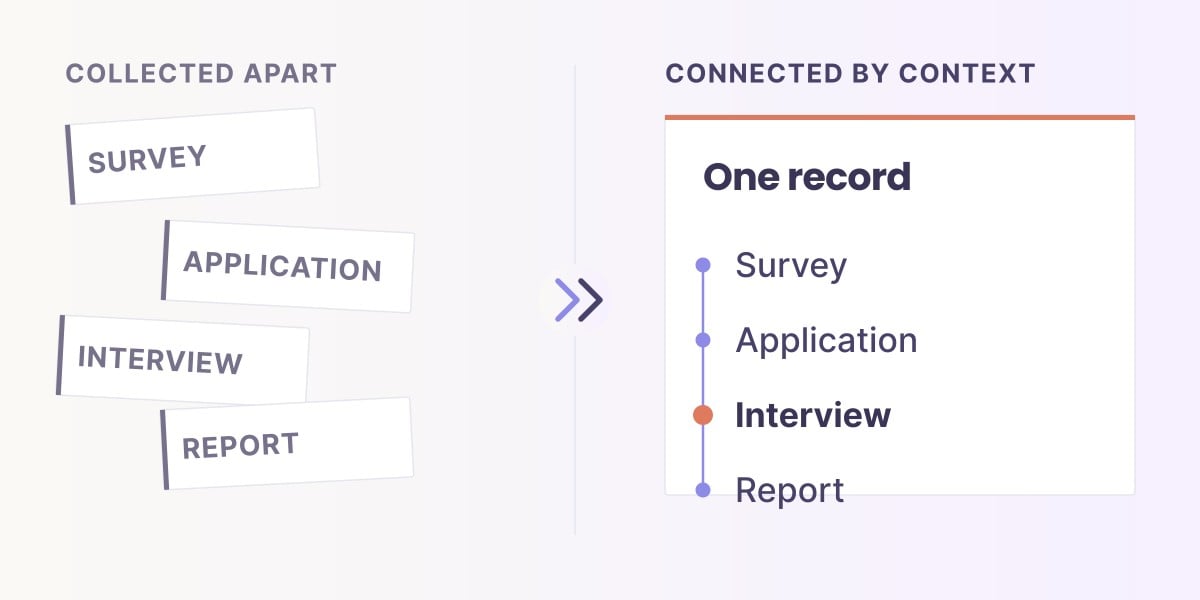
Problem 1: Data fragmentation. A typical impact real estate fund manages dozens of properties across multiple geographies, each with its own tenant demographics, construction timelines, and community contexts. Resident surveys live in SurveyMonkey. Financial data lives in property management software. Community indicators live in government databases. Construction employment data lives in contractor reports. Without a unified data architecture, analysts spend 80% of their time reconciling and cleaning data β€” leaving only 20% for actual insight generation.

Problem 2: Delayed insight. Annual impact reports are the standard deliverable in real estate impact investing. But by the time a report is published β€” typically 6-12 months after the reporting period ends β€” the data is too stale to guide management decisions, inform design improvements, or redirect capital to what's working. Investors receive a retrospective snapshot rather than a living intelligence system.

Problem 3: Qualitative data goes unused. The richest source of impact evidence β€” resident stories, community feedback, open-ended survey responses β€” is systematically ignored because organizations lack scalable systems to analyze unstructured text. A fund with 1,500 housing units may collect thousands of resident comments per year, but without AI-powered qualitative analysis, that data sits in files that nobody reads. The numbers get reported; the human context gets lost.

Organizations spend 80% of their evaluation time on data preparation rather than analysis. Only 5% of available context is typically used for decision-making. And 76% of impact organizations say measurement is a priority but acknowledge they are not doing it effectively. These numbers are not unique to real estate β€” they reflect a systemic failure across the entire impact measurement field.

The Broken Measurement Cycle in Impact Real Estate

How $1.2 trillion in impact capital flows without consistent evidence of what changes

πŸ“‹ Annual Survey Generic tool
⚠️ Months of Cleanup 80% of time
πŸ“Š Dashboard Disconnected data
πŸ“„ Annual PDF Report 6-12 months late
πŸ—‘οΈ 5% Insight Used Start from scratch
01
Data Fragmentation
Resident surveys in SurveyMonkey. Financials in property management software. Community data in government databases. Construction employment in contractor reports. No unified architecture links them together.
02
Delayed Insight
Annual reports arrive 6-12 months after data collection. By then, the data is too stale to guide property management decisions, inform design improvements, or redirect capital to what's working.
03
Qualitative Data Goes Unused
Resident stories, community feedback, and open-ended survey responses β€” the richest impact evidence β€” sit in files nobody reads because there's no scalable system to analyze unstructured text.
80%
Time spent cleaning data, not analyzing it
5%
Of available context used for decisions
76%
Say measurement is priority but aren't doing it effectively

From Annual Reports to Continuous Intelligence

The paradigm shift in social impact real estate measurement follows the same trajectory happening across the impact sector: from retrospective compliance reporting to continuous stakeholder intelligence.

The old paradigm works like this: Design a survey. Distribute it annually to residents and stakeholders. Collect responses in a generic survey tool. Export to spreadsheets. Spend weeks cleaning and deduplicating data. Hire a consultant to analyze findings. Produce a PDF report. Present to investors 6-12 months after data collection. Repeat next year starting from scratch.

The new paradigm works differently. Clean data architecture β€” built on persistent unique participant IDs β€” ensures every resident, stakeholder, and community partner is tracked across time without duplication. Surveys and feedback forms collect qualitative and quantitative data simultaneously. AI-powered analysis processes open-ended responses in minutes rather than months, extracting themes, sentiment, and actionable patterns. Reports generate continuously as data arrives, not annually after extensive manual preparation.

The difference is architectural, not cosmetic. You cannot get continuous intelligence by bolting AI onto a fragmented data collection system. The data architecture must be designed for integration from the beginning β€” unique IDs linking residents to units to properties to portfolios, qualitative responses coded and analyzed alongside quantitative metrics, and feedback loops that pass context forward from one collection cycle to the next.

Sopact Sense represents this architectural approach. Rather than adding AI features to a legacy survey tool, Sopact built a data collection and analysis platform where clean-at-source architecture eliminates the 80% cleanup problem, persistent unique IDs prevent data fragmentation across properties and time periods, the Intelligent Suite (Cell, Row, Column, Grid) applies AI analysis at every level from individual response to portfolio synthesis, and qualitative stakeholder feedback is analyzed alongside quantitative metrics in a single integrated workflow.

For a social impact real estate fund managing 20 properties, this means quarterly portfolio reviews that used to take weeks of data reconciliation now happen in minutes. Resident feedback that used to sit in unread files is automatically analyzed for themes, sentiment, and emerging patterns. And investors receive continuous evidence of impact rather than annual snapshots disconnected from management decisions.

From Annual Reports to Continuous Intelligence

The paradigm shift in social impact real estate measurement

βœ• Old Paradigm β€” Retrospective Compliance
βœ• Design annual survey in generic tool
βœ• Distribute once per year to residents
βœ• Export to spreadsheets, spend weeks cleaning
βœ• Hire consultant to analyze findings
βœ• Produce PDF report 6-12 months late
βœ• Repeat next year starting from scratch
βœ“ New Paradigm β€” Continuous Intelligence
βœ“ Persistent unique IDs link every resident across time
βœ“ Collect qual + quant data simultaneously
βœ“ AI analyzes open-ended responses in minutes
βœ“ Reports generate continuously as data arrives
βœ“ Context carries forward β€” never start from scratch
βœ“ Portfolio-level insight in minutes, not months
THE DIFFERENCE IS ARCHITECTURAL β€” NOT COSMETIC ↻ CONTINUOUS, NOT ANNUAL
πŸ”—
Clean at Source
Unique IDs prevent duplication across properties, time periods, and portfolios
🧠
AI-Native Analysis
Qualitative + quantitative analyzed together in a single integrated workflow
πŸ“‘
Continuous Learning
Each cycle builds on the last β€” context compounds, insight deepens over time
Key Insight
You cannot get continuous intelligence by bolting AI onto a fragmented data collection system. The architecture must be designed for integration from the beginning β€” unique IDs, integrated qual+quant workflows, and feedback loops that pass context forward.

Real-World Applications: How Impact Real Estate Teams Use Continuous Measurement

Social impact real estate measurement is not theoretical β€” organizations are already demonstrating what becomes possible when data architecture replaces manual processes.

Affordable housing portfolio management. A fund managing affordable housing across multiple states can use persistent unique IDs to track individual residents over time β€” from initial application through occupancy, satisfaction surveys, and life outcome indicators. When a resident who entered the program unemployed reports finding stable employment two years later, that outcome is automatically linked to the housing intervention. No manual matching across spreadsheets required.

Community revitalization tracking. Developers undertaking neighborhood-level interventions can collect feedback from residents, local business owners, community organizations, and public agencies through a single platform. AI analysis identifies whether different stakeholder groups experience the development differently β€” do longtime residents feel displaced while newcomers praise new amenities? That nuanced understanding requires qualitative analysis at scale, which manual approaches cannot deliver.

Investor reporting. Limited partners in impact real estate funds increasingly demand evidence, not assertions. Continuous measurement systems produce portfolio-level dashboards that show real-time progress on affordable units created, resident satisfaction trends, environmental performance metrics, and community economic indicators. These replace the static quarterly PDFs that investors have learned to distrust.

Property management optimization. When resident feedback is analyzed continuously rather than annually, property managers can identify maintenance issues, safety concerns, and amenity gaps in real time. Properties that respond quickly to resident feedback achieve higher satisfaction scores and lower turnover β€” which directly benefits financial performance.

Getting Started with Social Impact Real Estate

Whether you are an investor evaluating impact real estate funds, a developer incorporating social impact into projects, or a property manager seeking to measure community outcomes, the starting point is the same: build measurement into the design, not onto the report.

Define your impact thesis before you collect data. What specific social outcomes do you intend to achieve? Affordable housing for which populations? Community economic development measured how? Environmental performance against which benchmarks? Vague intentions produce vague measurement.

Invest in data architecture before you invest in dashboards. The most common failure mode in impact measurement is building beautiful dashboards on top of fragmented, duplicated, manually-assembled data. Start with unique participant IDs, standardized data collection forms, and integrated qualitative-quantitative workflows.

Choose tools designed for continuous learning, not annual compliance. The difference between a survey tool and a stakeholder intelligence platform is the difference between collecting data and generating insight. If your measurement system requires months of manual cleanup before anyone can ask a question, the architecture is wrong.

Engage stakeholders as participants, not subjects. The richest impact evidence comes from the people your investment is supposed to serve. Resident feedback, community input, and stakeholder stories provide context that no quantitative metric captures alone. AI-native platforms make this qualitative data actionable at scale for the first time.

See How Continuous Measurement Works
Watch: Impact Measurement in the Age of AI
See how AI-native architecture replaces months of manual data cleanup with continuous stakeholder intelligence β€” with real portfolio examples.
Watch Demo β†’
Explore: Impact Investment Use Cases
See how impact real estate funds, affordable housing programs, and community development organizations use Sopact Sense for portfolio-level measurement.
View Use Cases β†’

Social Impact Real Estate: Key Frameworks and Standards

Several frameworks guide how impact real estate investors structure their measurement and reporting.

GRESB (Global Real Estate Sustainability Benchmark) provides the most widely used ESG benchmarking framework for real estate portfolios. It assesses management, performance, and development across environmental, social, and governance dimensions, enabling investors to compare portfolios against global peer groups.

IRIS+ from the Global Impact Investing Network offers a catalog of standardized metrics for impact measurement across sectors, including real estate. Metrics cover affordable housing, community development, environmental stewardship, and economic opportunity.

UN Sustainable Development Goals provide a high-level alignment framework. Real estate impact investing most commonly aligns with SDG 11 (Sustainable Cities and Communities), SDG 7 (Affordable and Clean Energy), SDG 10 (Reduced Inequalities), and SDG 13 (Climate Action).

Impact Management Project (IMP) dimensions offer a structured way to describe impact: What outcome occurs? Who experiences it? How much change happens? What is the contribution beyond what would have happened anyway? What is the risk that impact doesn't occur as expected?

These frameworks solve the "what to measure" question. The operational challenge β€” how to collect, integrate, and analyze that data efficiently β€” is where technology architecture becomes decisive.

FAQ: Social Impact Real Estate

What is social impact real estate?

Social impact real estate is real estate investment, development, or management that intentionally generates measurable positive social and environmental outcomes alongside financial returns. This includes affordable housing, community revitalization projects, green building, and purpose-built facilities for healthcare, education, or workforce housing. The key distinction from conventional development is the commitment to structured measurement of community outcomes, not just financial performance.

How does real estate impact investing differ from traditional real estate investing?

Real estate impact investing differs from traditional investing in three ways: intentionality (the investor targets specific social or environmental outcomes), financial return expectation (it is investment, not charity), and measurement commitment (outcomes are tracked with evidence, not estimated through assumptions). Traditional real estate investing optimizes solely for risk-adjusted financial return. Impact investing maintains that financial discipline while adding rigorous social outcome tracking.

What are examples of socially responsible real estate investing?

Examples include investing in affordable housing funds that create or preserve units for low-income families, backing community revitalization projects that improve underserved neighborhoods, supporting green building developments with net-zero energy targets, funding healthcare or education facilities in areas with limited access, and participating in community land trusts that maintain long-term affordability. Firms like Turner Impact Capital, Bridges Fund Management, and BDP Impact demonstrate that these strategies can deliver competitive returns alongside measurable social outcomes.

How do you measure social impact in real estate?

Social impact in real estate is measured across five dimensions: housing access and quality (who gains housing, what quality of life changes result), economic impact (jobs created, local business support, tax revenue), community outcomes (social cohesion, amenity access, safety), environmental performance (emissions, energy efficiency, health outcomes), and governance (transparency, community input, accountability). Effective measurement requires structured data collection from residents and stakeholders, integration of qualitative and quantitative data, and analysis tools that produce timely insights rather than delayed annual reports.

What social factors affect the real estate industry?

Key social factors affecting real estate include housing affordability and income inequality, demographic shifts and workforce migration patterns, community health and well-being priorities, access to education and healthcare facilities, social cohesion and neighborhood safety perceptions, labor practices in construction and property management, and equity and inclusion in development planning. These factors increasingly influence both property values and regulatory requirements, making social impact measurement a strategic priority for developers and investors.

What is the difference between ESG and impact investing in real estate?

ESG investing applies environmental, social, and governance screens to identify real estate assets with lower risk profiles, often without requiring measurable social outcomes. Impact investing in real estate requires intentional targeting of specific social or environmental outcomes, structured measurement of those outcomes, and reporting that demonstrates evidence of change. ESG is a risk management framework; impact investing is an outcomes framework. They overlap but are not interchangeable.

How do affordable housing investments create social impact?

Affordable housing investments create social impact by providing stable, quality housing to populations that market-rate development excludes β€” including low-income families, seniors, people with disabilities, and essential workers. Research consistently shows that housing stability improves health outcomes, educational achievement for children, employment stability, and community engagement. Impact measurement in affordable housing tracks these outcomes beyond simply counting units created, examining whether residents' lives measurably improve over time.

What tools do impact real estate investors use for measurement?

Impact real estate investors currently use a mix of frameworks (GRESB, IRIS+, UN SDGs), survey tools (generic platforms like SurveyMonkey or Google Forms), spreadsheets for data aggregation, and evaluation consultants for annual reporting. This fragmented approach creates the "80% cleanup problem" β€” most time is spent reconciling data rather than generating insight. AI-native platforms like Sopact Sense replace this fragmented workflow with integrated data collection, automated qualitative analysis, persistent participant tracking, and continuous reporting that delivers stakeholder intelligence in minutes rather than months.

Is social impact real estate profitable?

Yes. Multiple studies and fund track records demonstrate that social impact real estate can deliver competitive risk-adjusted returns. Turner Impact Capital has positioned over $6.1 billion in social impact real estate. BDP Impact operates fund-level vehicles delivering returns alongside measurable impact. The key finding is that social value and financial value are not opposed β€” affordable housing addresses unlimited demand, community revitalization increases property values, and well-managed impact properties achieve higher tenant retention. The challenge is measurement, not profitability.

How is AI changing social impact measurement in real estate?

AI is transforming social impact measurement in real estate by automating qualitative data analysis (processing thousands of resident comments in minutes rather than months), enabling continuous rather than annual measurement cycles, integrating diverse data sources (surveys, feedback, documents, property records) into unified intelligence systems, and reducing the time from data collection to actionable insight from months to minutes. AI-native platforms designed for impact measurement β€” rather than general-purpose AI bolted onto legacy tools β€” represent the most significant advance in the field since the adoption of digital surveys.

Social impact real estate deserves measurement systems as rigorous as the capital behind it. Stop shipping annual PDFs. Start building continuous evidence.
Book a Demo
See how Sopact Sense transforms impact measurement for real estate portfolios β€” from fragmented spreadsheets to continuous stakeholder intelligence.
Schedule Demo β†’
Watch: Portfolio Demo
See a live walkthrough of how impact investors use Sopact Sense for portfolio-level measurement across multiple properties and programs.
Watch Video β†’
Subscribe to Sopact on YouTube for weekly insights on AI-native impact measurement

Upload feature in Sopact Sense is a Multi Model agent showing you can upload long-form documents, images, videos

AI-Native

Upload text, images, video, and long-form documents and let our agentic AI transform them into actionable insights instantly.
Sopact Sense Team collaboration. seamlessly invite team members

Smart Collaborative

Enables seamless team collaboration making it simple to co-design forms, align data across departments, and engage stakeholders to correct or complete information.
Unique Id and unique links eliminates duplicates and provides data accuracy

True data integrity

Every respondent gets a unique ID and link. Automatically eliminating duplicates, spotting typos, and enabling in-form corrections.
Sopact Sense is self driven, improve and correct your forms quickly

Self-Driven

Update questions, add new fields, or tweak logic yourself, no developers required. Launch improvements in minutes, not weeks.