A Sopact customer partnership
The Lantern Network works with students and emerging professionals through mentorship, professional development, and career exposure. Its programmes help people build the skills, confidence, and connections that make long-term mobility possible.
Across a three-year partnership with Sopact, the work is evolving from isolated surveys into one evidence practice that follows learning while it is happening.
Growth does not fit inside a pre/post survey
Confidence, workplace habits, professional networks, and career readiness change over time. A single survey at the beginning and end of a programme cannot show what strengthened, what stalled, or where a participant needed support.
For a lean team, the consequence is familiar: rich activity, scattered feedback, and too much manual work before a funder or programme decision can be made.
Connect the signals around every learner
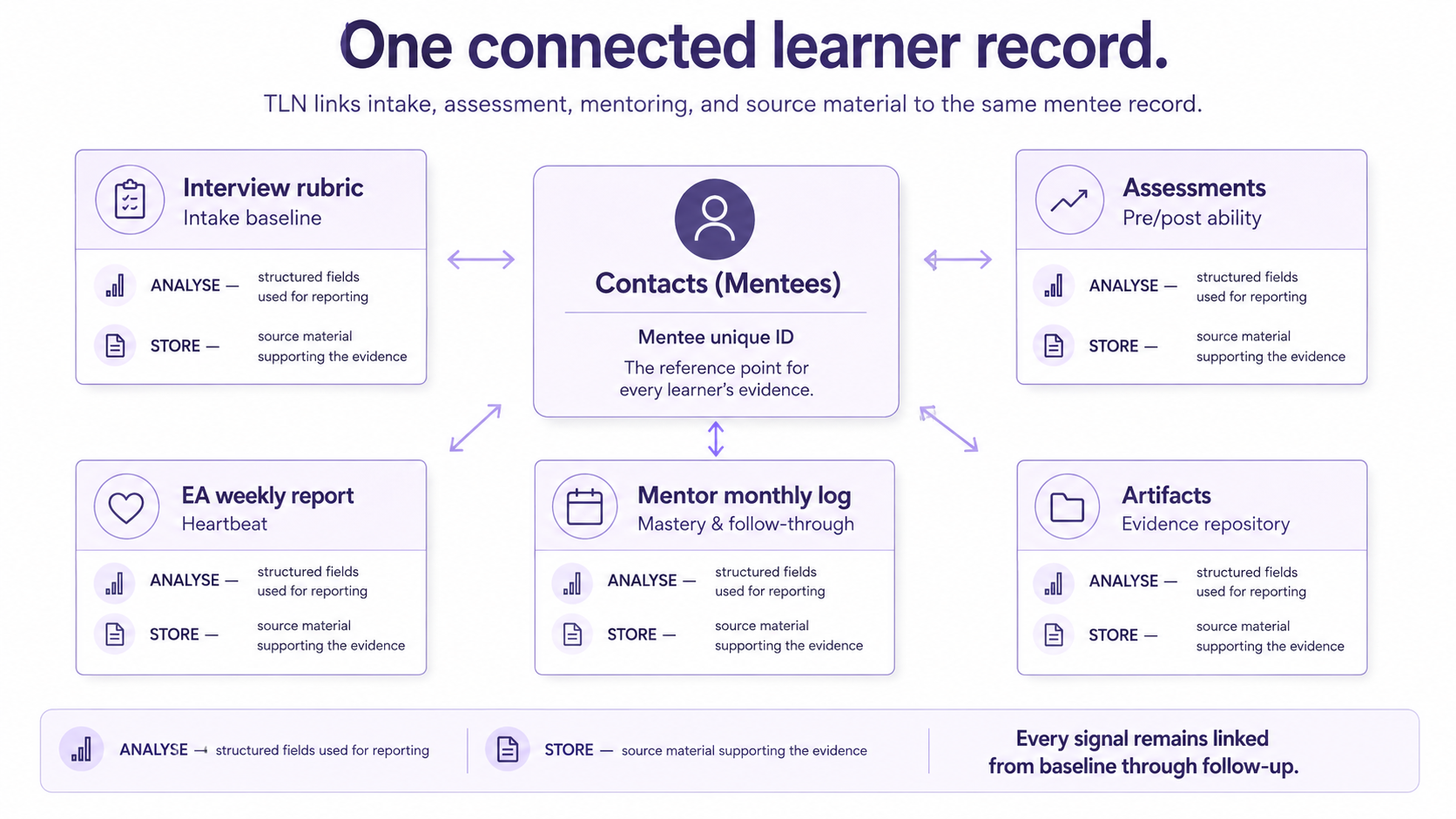
The Lantern Network is building a record that stays with the participant from baseline through follow-up. Structured responses can sit alongside staff observations and, where appropriate and consented, evidence from participant, ambassador, alumni, and employer conversations.
- Baseline signals establish each participant’s starting context.
- Midpoint evidence helps the team see where support may be needed.
- Exit and follow-up responses keep outcomes connected to the journey that produced them.
Keep the human view of the evidence
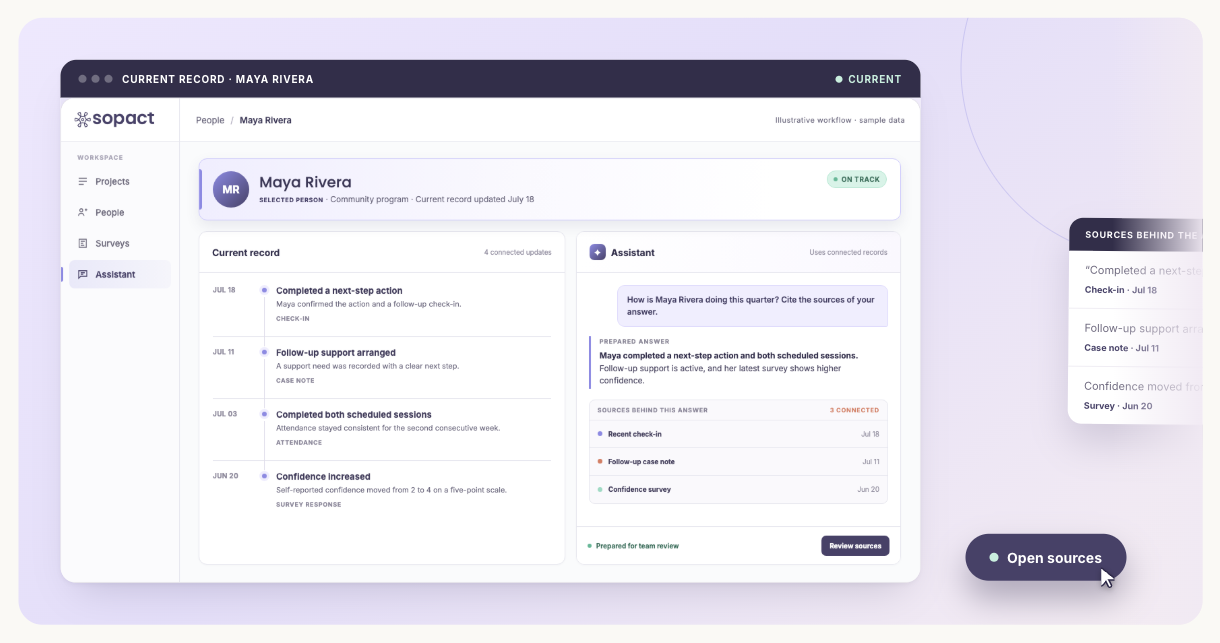
AI-assisted analysis helps the team work with open-text feedback without flattening it into a score. Staff can trace an insight to its source, retain the context behind it, and decide what action is useful next.
The aim is not automated judgement. It is a clearer, more workable view of progress for mentors, programme leaders, and the people responsible for learning design.
Make the donor narrative evidence-led
As historic surveys and reports move into a connected environment, The Lantern Network can bring programme evidence, stories of change, and follow-up signals into the same reporting process. That gives the team a more credible foundation for programme improvement and donor communication—without asking staff to rebuild the story by hand each time.
Privacy note: This case study describes the partnership at a high level. It does not disclose participant information, financial figures, or confidential programme performance data.