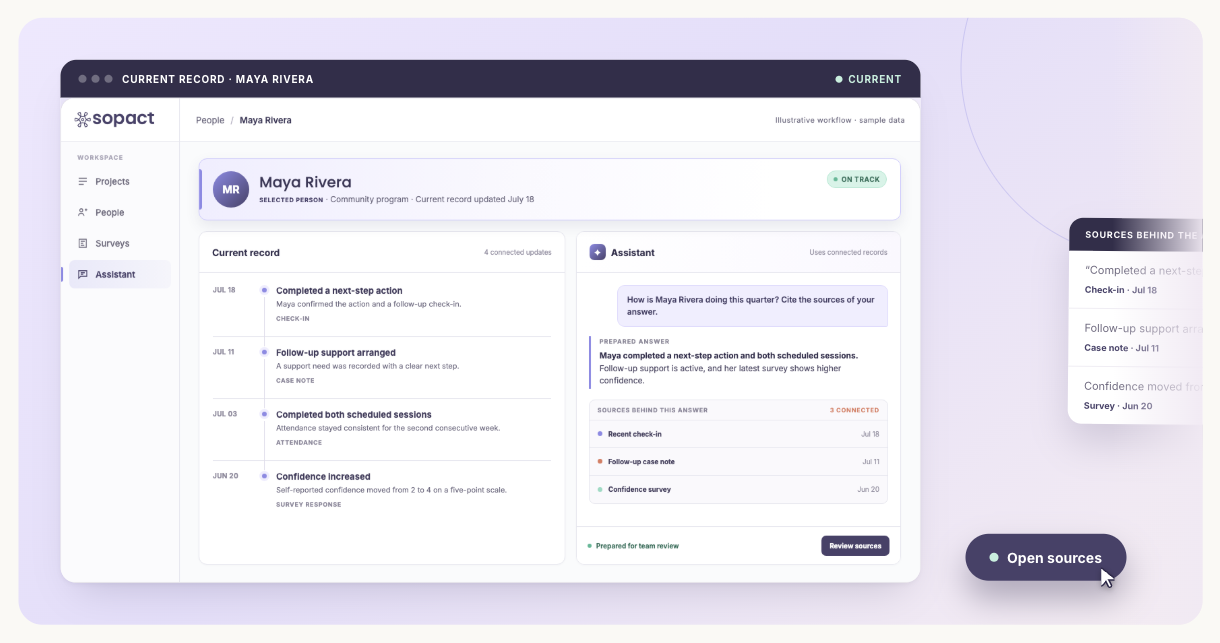
The implementation is designed to connect attendance, assessments and feedback to the same participant over time.
A girl’s experience continues beyond a reporting cycle
Girls Inc. of Metropolitan Dallas supports girls through programmes that build their knowledge, confidence and leadership. A participant may return across years and take part in more than one programme. Understanding that experience requires a record that can grow with her.
The organisation’s engagement with Sopact addresses a familiar operational problem: useful information was spread across spreadsheets, programme records and local files. Staff needed to find the right data, recognise repeat records and connect activity in one year to information collected in another.
Bring the participant’s evidence together
The Sopact implementation centres on a shared structure for participant and programme information. A consistent participant identity is intended to connect attendance, assessments and qualitative feedback, allowing later information to add to the existing record.
That continuity matters for everyday work. When a staff member needs to understand a participant’s experience, the relevant evidence should be easier to locate. When the organisation reports across programmes or fiscal years, it should be able to distinguish a returning participant from a new record.
Connect attendance to the questions behind progress
Attendance helps explain participation. Assessments and open-ended feedback add another perspective: what girls experienced, what they learned and where they may need more support.
The engagement includes structuring that evidence for analysis and using Sopact’s AI capabilities to help staff examine qualitative responses. The practical goal is to spend more time interpreting programme experience and less time assembling information from separate files.
Build continuity with privacy in mind
Connecting participant information also requires clear decisions about access and use. Data privacy, staff permissions and the role of AI formed part of the organisation’s governance and onboarding discussions.
Those requirements sit alongside the programme design. The implementation needs to support staff responsibilities while giving leadership a clearer basis for oversight and reporting.
Let reporting draw from the ongoing record
The longer-term direction is reporting that draws from connected programme evidence, including follow-up information as it becomes available. That can help the team explain how participation relates to progress without rebuilding a participant’s history for every board or donor question.
This is an implementation story. The supplied materials describe the workflow and its intended benefits; they do not establish a measured percentage reduction in administration or a verified change in long-term participant outcomes.
A starting point for programmes with returning participants
For another youth organisation, the first useful question is concrete: can the team follow the same person across the records it already collects? Establishing that continuity creates the foundation for better follow-up and more informative reporting.
Explore Sopact’s Training & Programs workflow for a related approach to connecting participation, feedback and progress.
About Girls Inc. of Metropolitan Dallas
Girls Inc. of Metropolitan Dallas equips girls to develop as leaders through direct services and advocacy. Learn more about the organisation and its programmes at girlsincdallas.org.